Artwork information
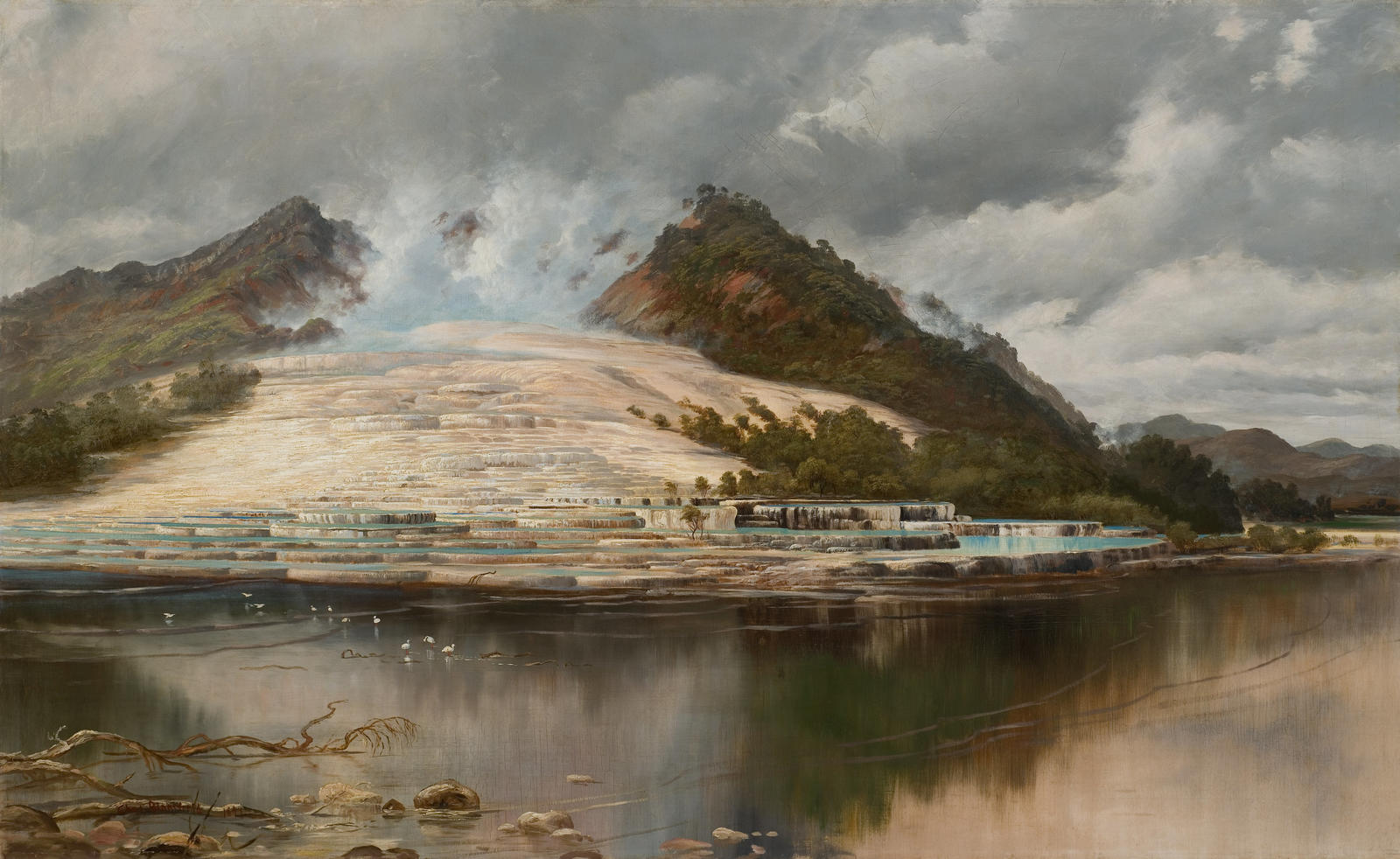
The vast silica slopes of Te Tarata, the White Terrace of Rotomāhana, were an international tourist attraction dubbed the 'Eighth Wonder of the World'. Visitors wore special shoes in order to climb up and gaze into the throat of the gigantic geyser whose silica-charged waters had formed the terraces over countless centuries. Visited by many painters and photographers, the terraces of Rotomāhana became one of New Zealand's most depicted landscapes of the late nineteenth century. Auckland artist Charles Blomfield spent six weeks at Rotomāhana early in 1885, documenting the Pink and White Terraces and the surrounding landscape in a series of oil paintings. By September 1885 it was reported that orders for paintings had been 'received and executed from tourists hailing from London, France, Germany, America, Australia, and other places'. When adjacent Mount Tarawera erupted on 10 June 1886, totally destroying the famous terraces, fourteen of Blomfield's Rotomāhana canvasses were on display at London's Colonial and Indian Exhibition. The loss of the terraces spurred Blomfield to produce many more versions. Although painted in response to demand from tourists, few of Blomfield's paintings depicted tourist activity. Instead, the paintings promote a nostalgic vision of Rotomāhana in its 'native purity', uncontaminated by the visitors whose profane graffiti and souvenir hunting had already despoiled its grandeur. (from The Guide, 2001)
- Artist
- Charles Blomfield
- Title
- White Terraces, Rotomahana
- Production date
- 1897
- Medium
- oil on canvas
- Dimensions
- 868 x 1483 x 60 mm
- Credit line
- Auckland Art Gallery Toi o Tāmaki, gift of Mr D L Murdoch
- Accession No
- U/27
- Copyright
- No known copyright restrictions
- Department
- New Zealand Art
- Display status
- Not on display
More by Charles Blomfield (22)
White Terraces, Rotomahana
1897
Saint Thomas' Church, Tamaki
1886
Castle Rock, Coromandel, sunrise, from the Mercury Bay track
1888
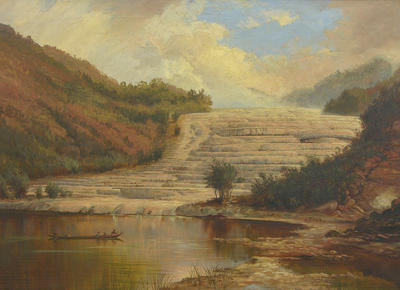
Pink Terrace, Rotomahana
1893
Explore connections (7)
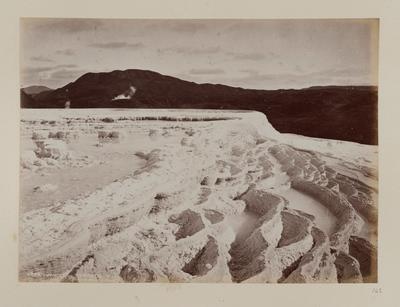
Terraces
104 Artworks
Tourism
7 Artworks
Hills
1092 Artworks
Lakeshores
170 Artworks
Picturesque, the
31 Artworks