We answer the questions you’re too afraid to ask about visiting Auckland Art Gallery
From gallery etiquette to bringing kids and taking photos, we answer common questions to help you feel confident and make the most of your visit to Auckland Art Gallery Toi o Tāmaki.
Am I standing too close? Should I be whispering? And is everyone else going to know that I have absolutely no idea what I’m looking at?
If you don’t spend much time in art galleries, it’s understandable you might have a few questions like these – some you may be too shy to ask and some that could even be holding you back from visiting. There can be the assumption that everyone else knows an unwritten set of rules, along with considerably more about art than you do.
But visiting Auckland Art Gallery Toi o Tāmaki requires very little prior knowledge. You can come to see a particular artist’s work or a whole exhibition, bring the kids for a creative afternoon, meet a friend for coffee, or walk through the doors knowing nothing more than the fact that you’re curious.
For everything else, consider this your guide to the questions you may have wondered about but never quite got around to asking.
Do I have to be quiet while exploring the Gallery?
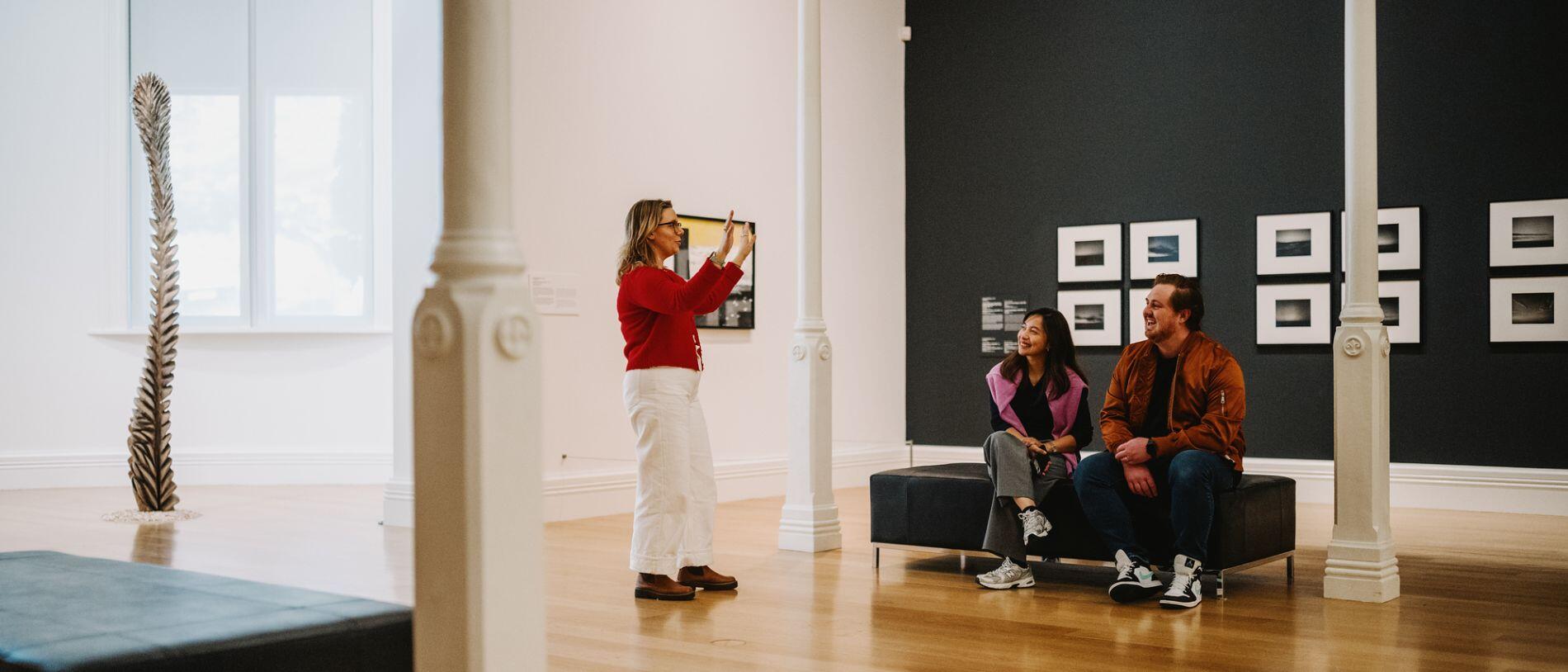
There’s no need to whisper. While some people come to the Gallery for quiet reflection, conversation is very much part of the experience too. You’ll regularly find school groups discussing what they see, guided tours moving through the galleries and friends comparing their reactions to the same work. An inside voice is appreciated, but complete silence certainly isn’t expected.
As one of our gallery assistants puts it: ‘You can talk about what you’re seeing, ask questions, disagree with each other and laugh – just be considerate of the other people sharing the space.’
If you’d prefer a quieter experience, the Gallery’s relaxed hours every Tuesday from 3pm to 5pm offer a lower-stimulation way to visit, with fewer crowds, dedicated chill spaces and sensory tools such as ear defenders available from the front desk.
And if you find yourself debating an artwork with the person you came with? Go for it. Just save your outdoor voice for Albert Park.
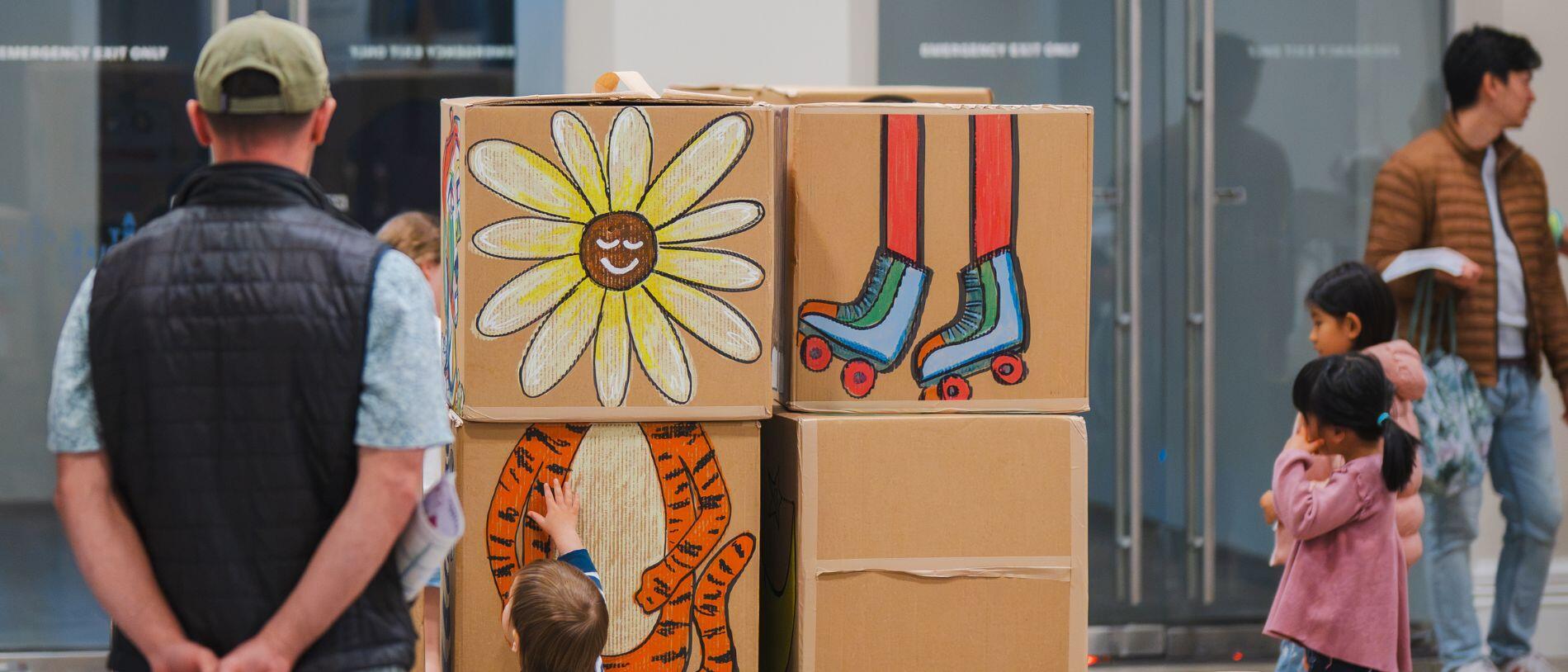
Image credit: Benj Brooking
Why can’t I touch the art?
We understand the temptation. Particularly when an artwork has an interesting texture, is made of an unusual material or has a surface that practically begs for a closer look. But even the cleanest hands carry natural oils, and those oils can cause damage over time. Some artworks are also much more delicate than they appear, so keeping your hands to yourself helps protect them for everyone who comes after you.
There are exceptions, of course. Some artworks and installations are specifically designed to be touched or interacted with, and signage or Gallery staff will let you know when that’s the case. Until then, eyes only.
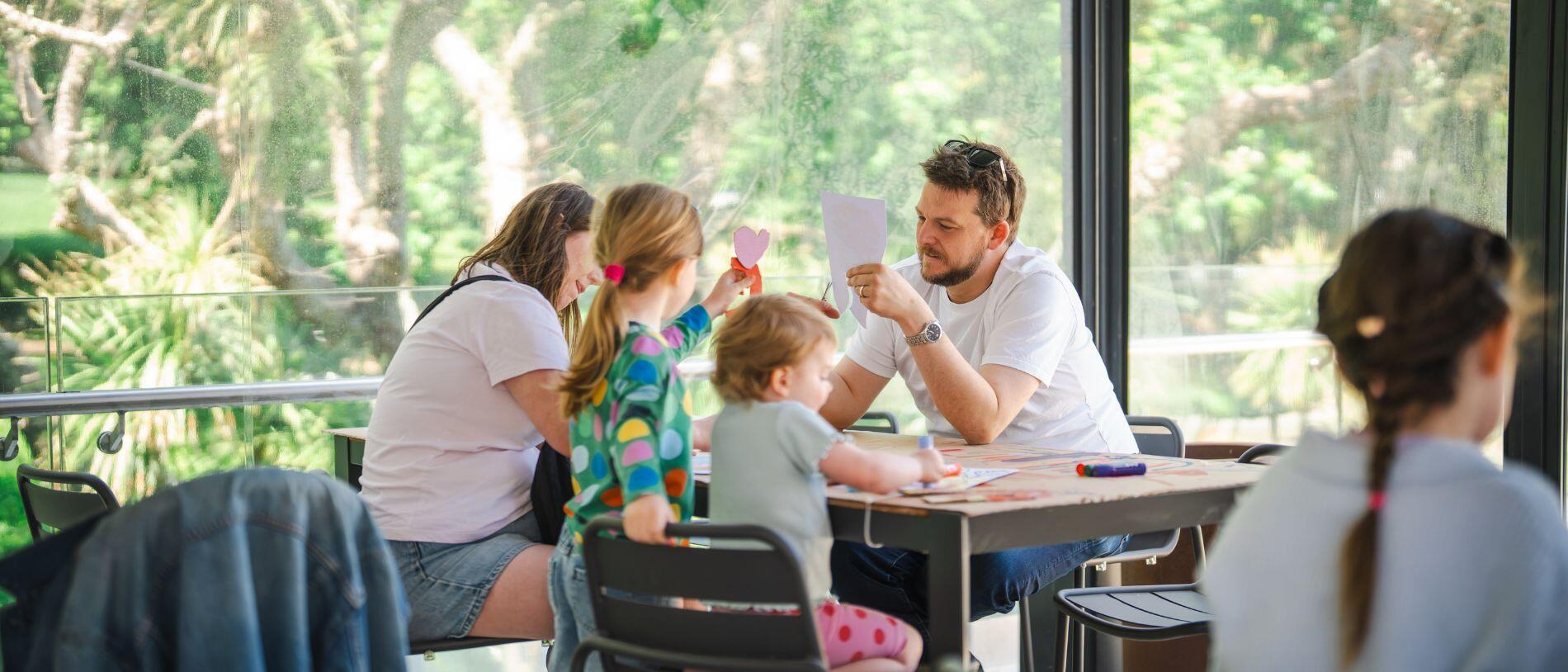
Image credit: Benj Brooking
Should I leave the kids at home when I come to the Gallery?
Absolutely not. Tamariki don’t need to know how to behave like tiny art critics before they arrive, either.
Auckland Art Gallery has plenty of ways for children and whānau to explore art on their own terms. Pick up a kids and whānau guide from the brochure racks or the front desk, visit Te Aka Matua | The Creative Learning Centre for hands-on activities, or look out for kids and whānau create sessions and other family events throughout the year.
In fact, gallery assistants often notice that children approach the space with fewer preconceptions than adults. ‘Children often experience the entire Gallery – not just the artworks – as something to explore. They notice the stairs, the fossil shells in the floor and the red couches, and they are often more willing than adults to be curious without worrying whether they are looking at something “correctly”.’
They also take their cues from the adults around them, the Gallery assistants point out, which is a good reason to explore alongside them rather than feeling like you need to teach them the ‘right’ way to experience art.
If you’re planning your first visit together, the Gallery’s family guide has more ideas for making a day of it.
Can I come to the Gallery if I know nothing about art?
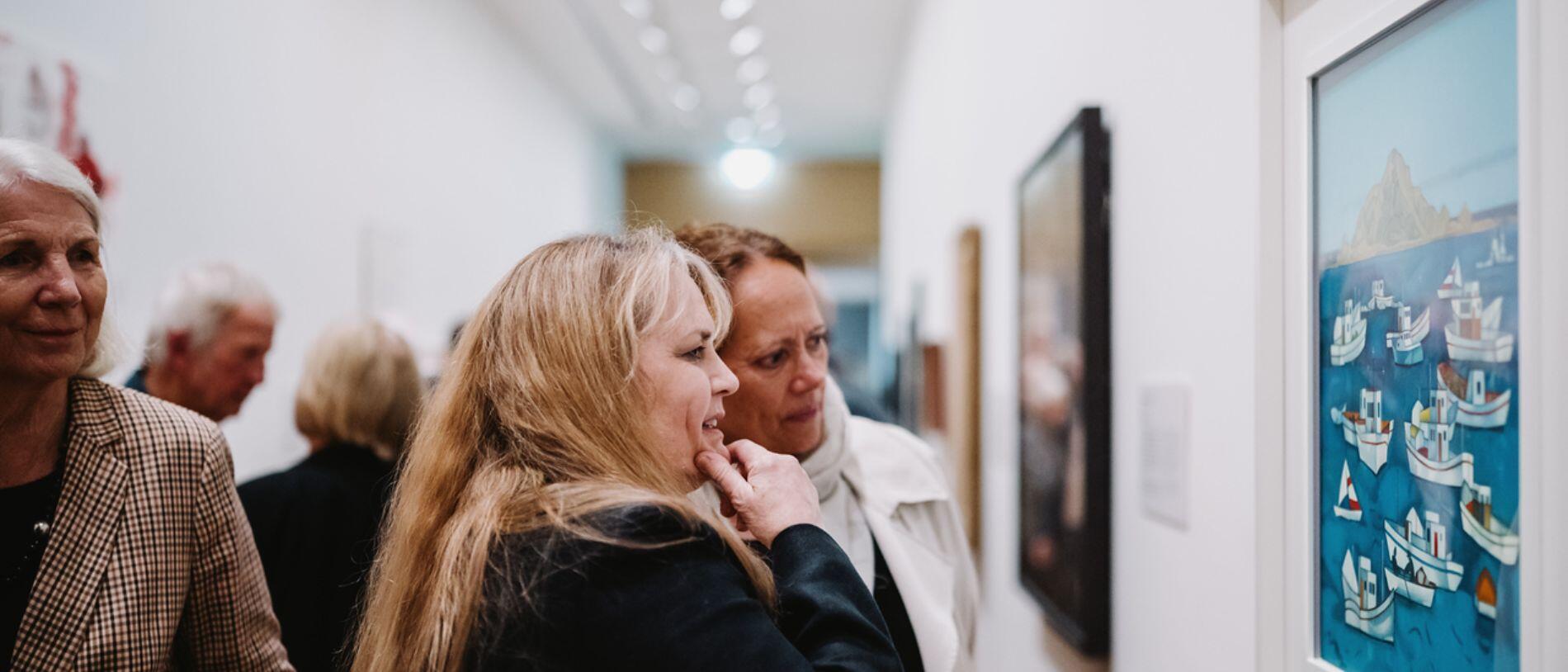
Please do. It’s a very good place to start! You don’t need to recognise the artist, understand the movement or have an observation prepared before you stand in front of an artwork. You can simply look and work out what you think from there.
‘You don’t need to know anything about art before you walk in,’ one of our gallery assistants says. ‘There isn’t a correct response to an artwork, and nobody is going to test you – liking it, disliking it or feeling completely puzzled by it are all perfectly valid places to start.’
If you want to dig deeper, there are plenty of ways to do it. Join a guided tour, come along to a talk, event or festival, read the label next to the artwork, or ask one of the Gallery assistants. They love having a chat about art!
You might begin with something as simple as what caught your attention, what you think might be happening in the work or why the artist chose a particular material. We promise: there isn’t a test at the end.
If you want some tips, we’ve put together a guide for beginners on how to look at art.
How can I start learning more about New Zealand and Pacific art?
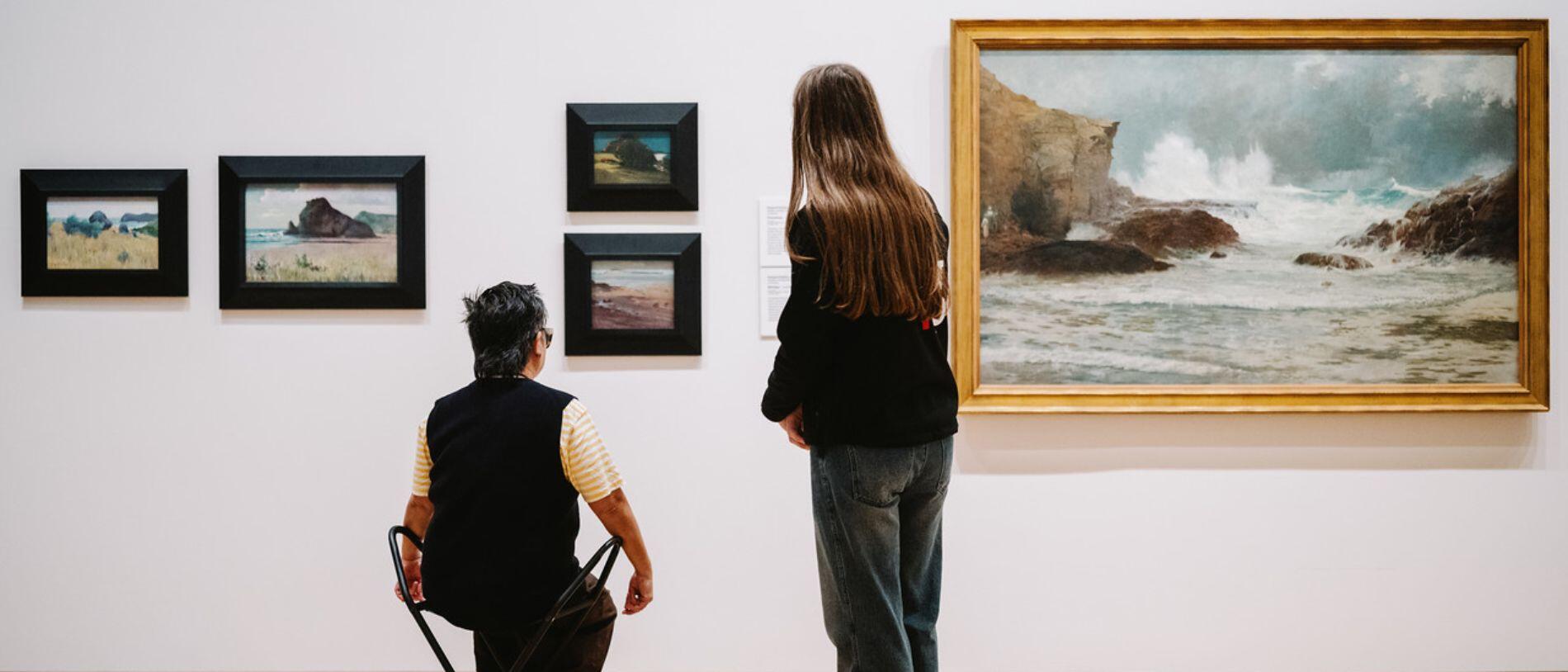
Start on the ground floor, where you’ll find Taimoana | Coastlines: Art in Aotearoa, an exhibition exploring the influence of the coast on art and artists in Aotearoa New Zealand.
Ane Tonga, the Gallery’s curator, Pacific art, recommends beginning in the first Gibbs Gallery, where works by Paul Tangata, Teuane Tibbo and Yuki Kihara offer three very different introductions to Pacific art. Tangata and Tibbo both draw on memories of childhood in the Pacific, while Kihara’s sculptural kimono bring together material traditions from her Japanese and Samoan ancestry.
‘This is a pretty strong base to draw from, and it grows as you explore the exhibition,’ says Ane. ‘We’ve tried to be very generous, so you’ll find a work by a Pacific artist in almost all of our ground floor gallery spaces.’
As you explore, look out for the many ways artists engage with Te Moana Nui-a-Kiwa, the great Pacific Ocean. ‘It is an endless source of inspiration and Pacific artists have approached this in so many ways,’ Ane says, from using their bodies and customary practices such as barkcloth to working with moving image.
And if you’re wondering whether there’s anything you should know before you start? Ane’s advice is refreshingly simple: ‘An open mind and hungry curiosity is always handy.'

Can I come in if I just want to visit the café or shop?
Yes, there’s no expectation to view the art. The Gallery café and shop are both open to the public, so you’re welcome to drop in for coffee or something to eat, browse books, prints, jewellery, homewares and gifts in the shop, without visiting an exhibition. Of course, once you’re already inside, there’s nothing stopping you from having a quick look upstairs!
What am I allowed and not allowed to bring to the Gallery?
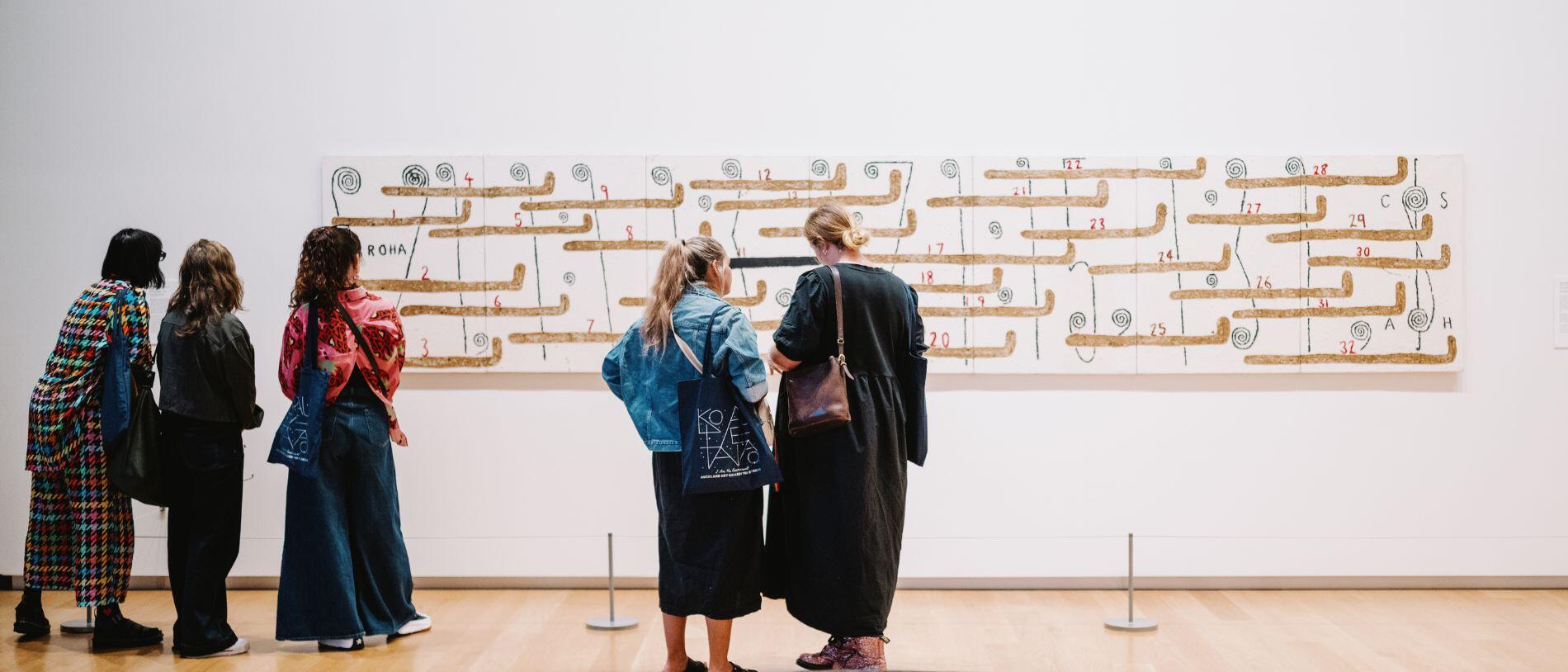
Most of what you’d normally carry around with you is perfectly fine, but few simple guidelines help protect the artworks and make the galleries comfortable for everyone.
Food and drinks need to stay within designated areas, rather than coming into the gallery spaces with you. If you have a large backpack, you’ll need to leave it at the free coat check or carry it by hand. It may seem like an oddly specific rule, but there’s a practical reason: a bag sticking out behind you can get surprisingly close to an artwork without you realising it.
If you’re unsure about something you’ve brought with you, ask at the front desk. The Gallery’s plan your visit page also covers the practical details before you arrive.
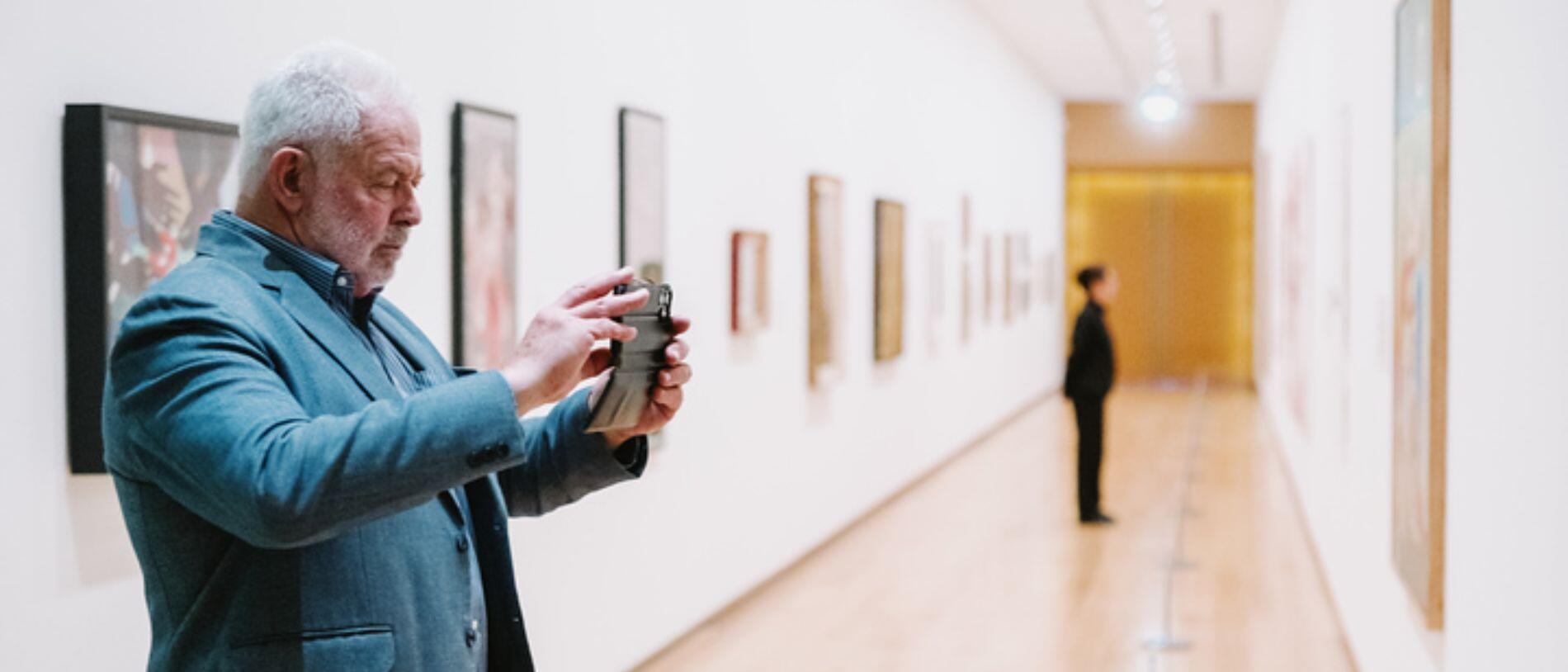
Can I take photos inside the Gallery?
In most cases, yes. Personal photography on handheld devices is encouraged, so you can photograph a work you want to remember or capture moments from your visit.
There are some exceptions, so check the signage around individual artworks and exhibitions before reaching for your phone. Commercial photography, tripods, livestreaming and full photoshoots also require prior permission from the Gallery.
And while taking a photo is useful, give yourself a chance to look at the real thing before viewing it again through your camera roll.
Are there secret art gallery etiquette rules I should know about?
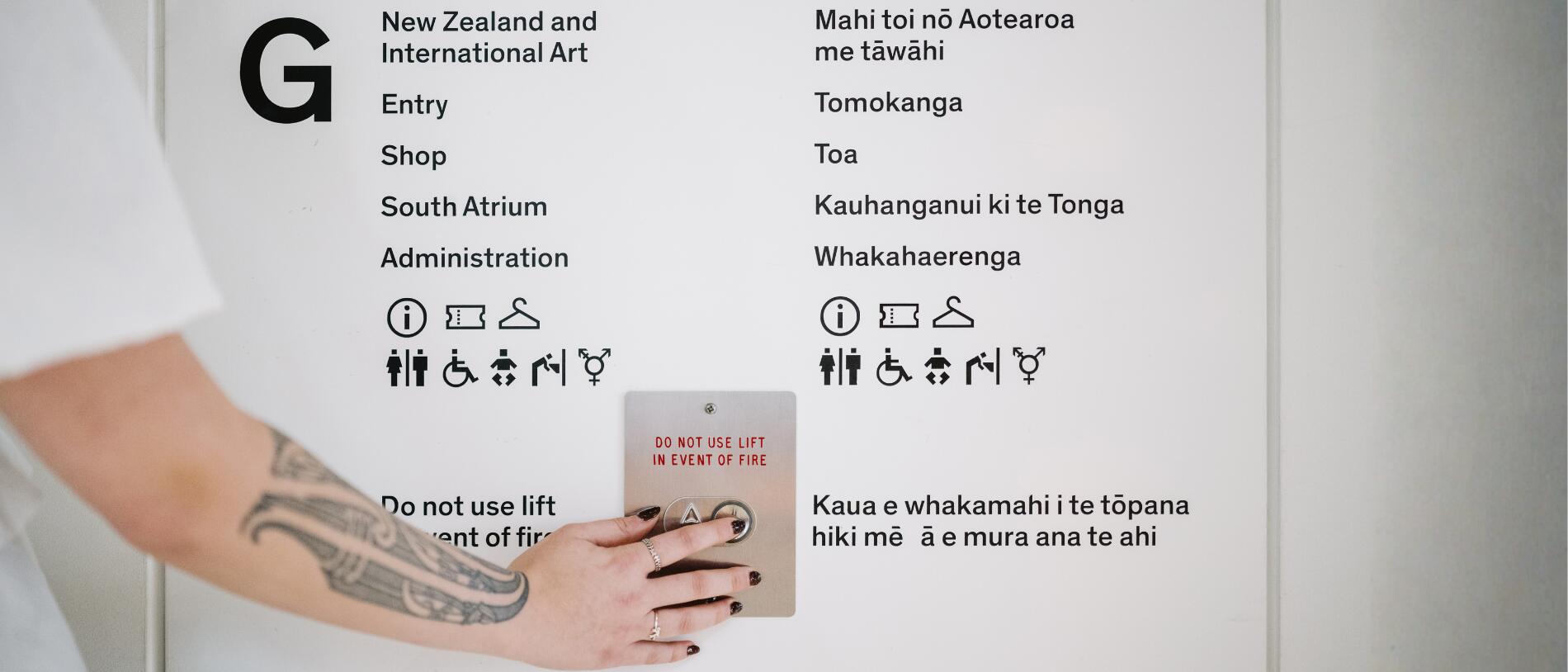
Thankfully, there isn’t a hidden handbook everyone else received before arriving. Most Gallery etiquette comes down to a few simple things: respect the art, be considerate of the people around you and follow any signage or guidance from Gallery staff. Keep food and drinks to the designated areas, check before touching anything and be aware of where your belongings are when you’re close to an artwork.
Perhaps the biggest misconception is that there’s a prescribed way to make your way through the Gallery. As our Gallery assistants say: ‘Don’t feel that you need to see everything or follow a prescribed route.’ Grab a map and head towards whatever catches your eye.
Beyond that, there’s no particular way you’re expected to experience the Gallery. You can spend 20 minutes with one painting or walk straight past it. You can read every label or barely any of them. You can arrive knowing exactly what you want to see or choose a staircase and find out where it leads. Bring your questions, your opinions and your curiosity. You’ll fit in just fine.