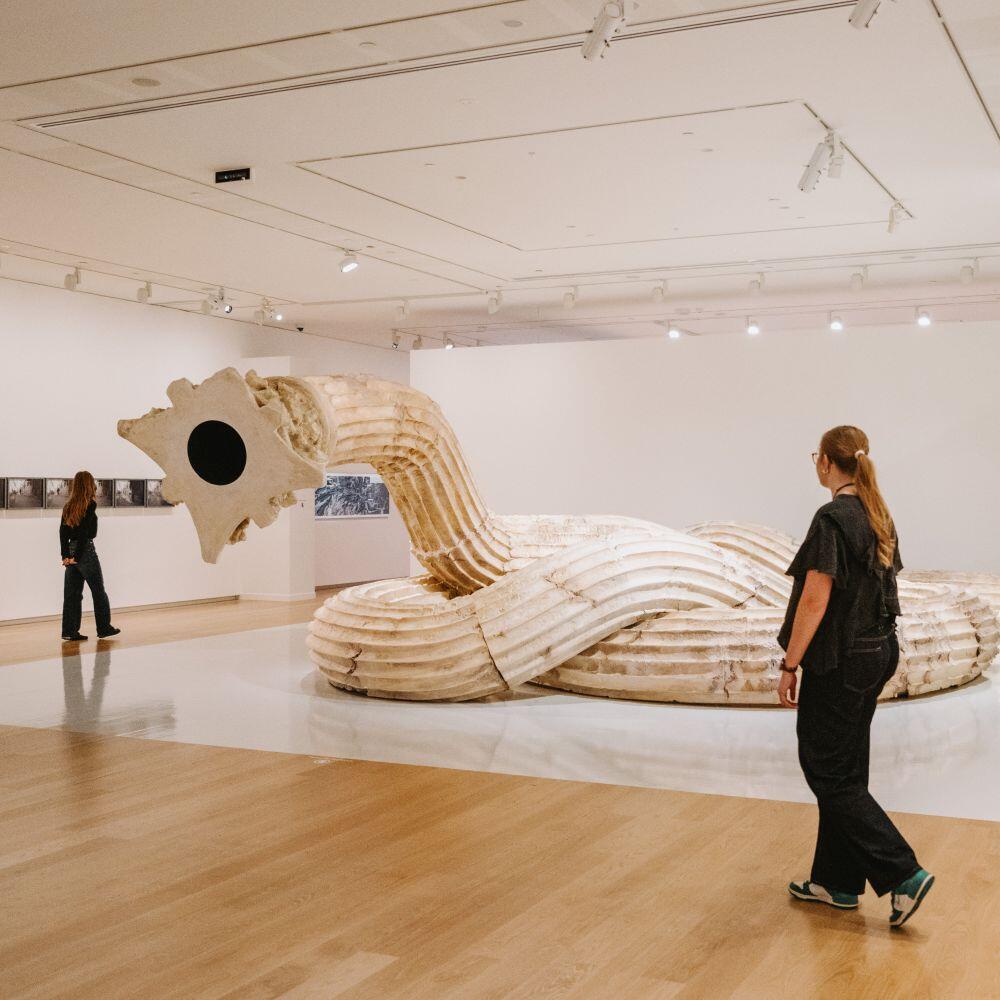
How to look at art: 7 beginner tips for your next art gallery visit
Don’t ‘get’ art? We’ve got you covered. Just bring your eyes and a touch of curiosity to your next visit to Auckland Art Gallery Toi o Tāmaki.
Ever walked into an art gallery and thought: Am I doing this right?
You’re not alone! The good news is there’s no secret language, no pop quiz and no ‘correct’ way to look at art. If you’ve ever wondered how to look at art in a gallery without feeling intimidated, these beginner-friendly tips will help.
At Auckland Art Gallery Toi o Tāmaki, curators agree that art is for everyone. Learning how to look at art isn’t necessarily about finding answers. It’s about giving yourself permission to look, feel, and take your time.
As curator Julia Waite puts it, engaging with art is personal. What matters most isn’t what you know, but what the work activates for you personally.
Here are seven tips to help you slow down, trust your instincts, and enjoy your next art gallery visit.
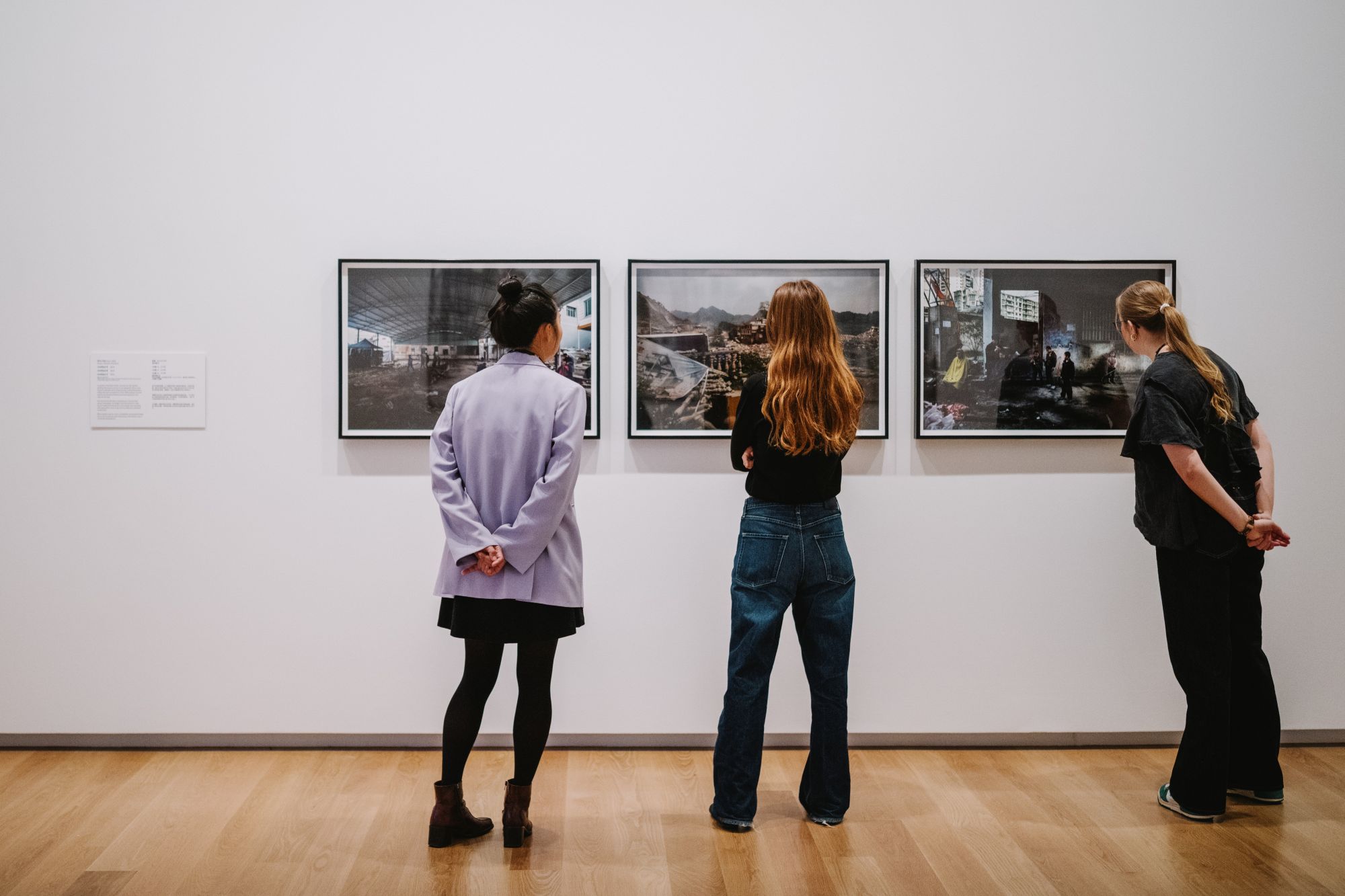
Visitors stop to notice artworks from our Forever Tomorrow: Chinese Art Now exhibition (2 May 2026 to 26 August 2026).
Artwork credit: Guo Jian, Untitled 4 (left), Untitled 8 (middle), Untitled 3 (right) (installation view), 1962, White Rabbit Collection, Sydney. Donated through the Australian Government’s Cultural Gifts Program by Judith Neilson.
1. Start by noticing
When you encounter an artwork for the first time, resist the urge to try and understand it straight away.
‘I’m not looking for any one thing,’ says Waite. ‘I let my eyes wander across the work and simply notice what I can see.’
If you’re new to looking at art, starting with visual elements can make the experience feel more accessible, such as:
- Colour: Bold or muted? Warm or cool? Does the colour create a mood or atmosphere?
- Texture: Does the surface look smooth, rough, layered, glossy, or worn?
- Shape: What kinds of forms do you see? Are the forms sharp or soft? Geometric or organic? Do they feel stable, tense, playful, or chaotic?
- Light: Where is the light coming from? Is it natural or artificial? Does it reveal, obscure, or dramatise parts of the work?
- Mood: What’s the overall emotion or tone? Calm, uneasy, joyful, heavy, intimate?
As art critic John Berger wrote in his influential book Ways of Seeing (1972), ‘We can explain the world with words, but words can never undo the fact that we are surrounded by it.’
In other words, our first response to art is often visual, emotional, or instinctive. The explanation can come later – if it comes at all.
An art gallery isn’t a classroom and you won’t be tested. We promise!
2. Give it more time than feels natural
Yes, we mean linger.
One of the biggest misconceptions about art is that there’s a moment where it suddenly clicks.
‘Artworks require time,’ Waite explains. ‘You can return again and again and notice more.’
Try this:
- Choose one artwork
- Stay with it for at least 60 seconds (a full minute)
- Notice what changes once your eyes settle
Dr Sarah Farrar, head of curatorial and learning, says the best works reveal something new each time you engage with them. Slowing down is often where the magic happens.
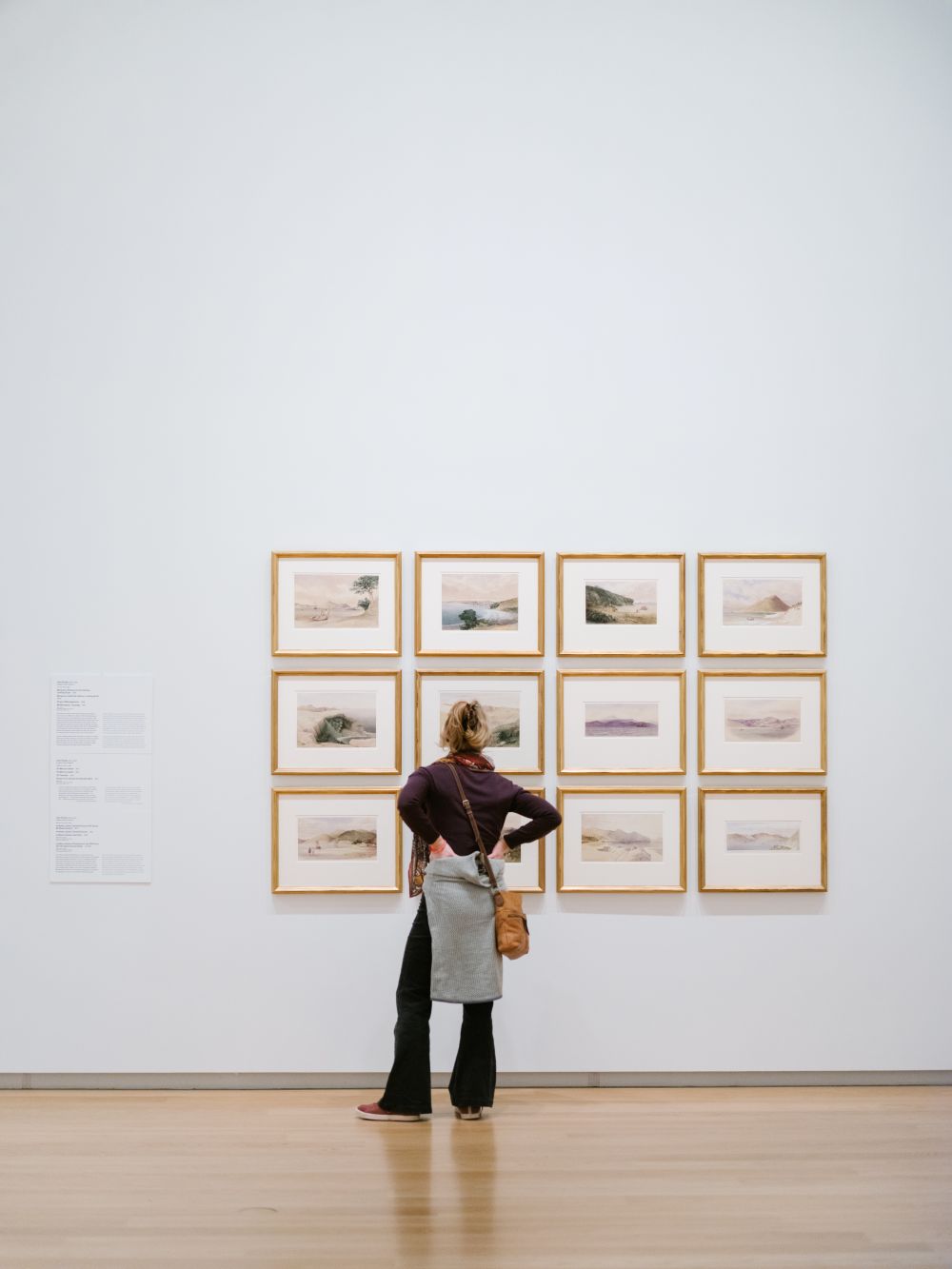
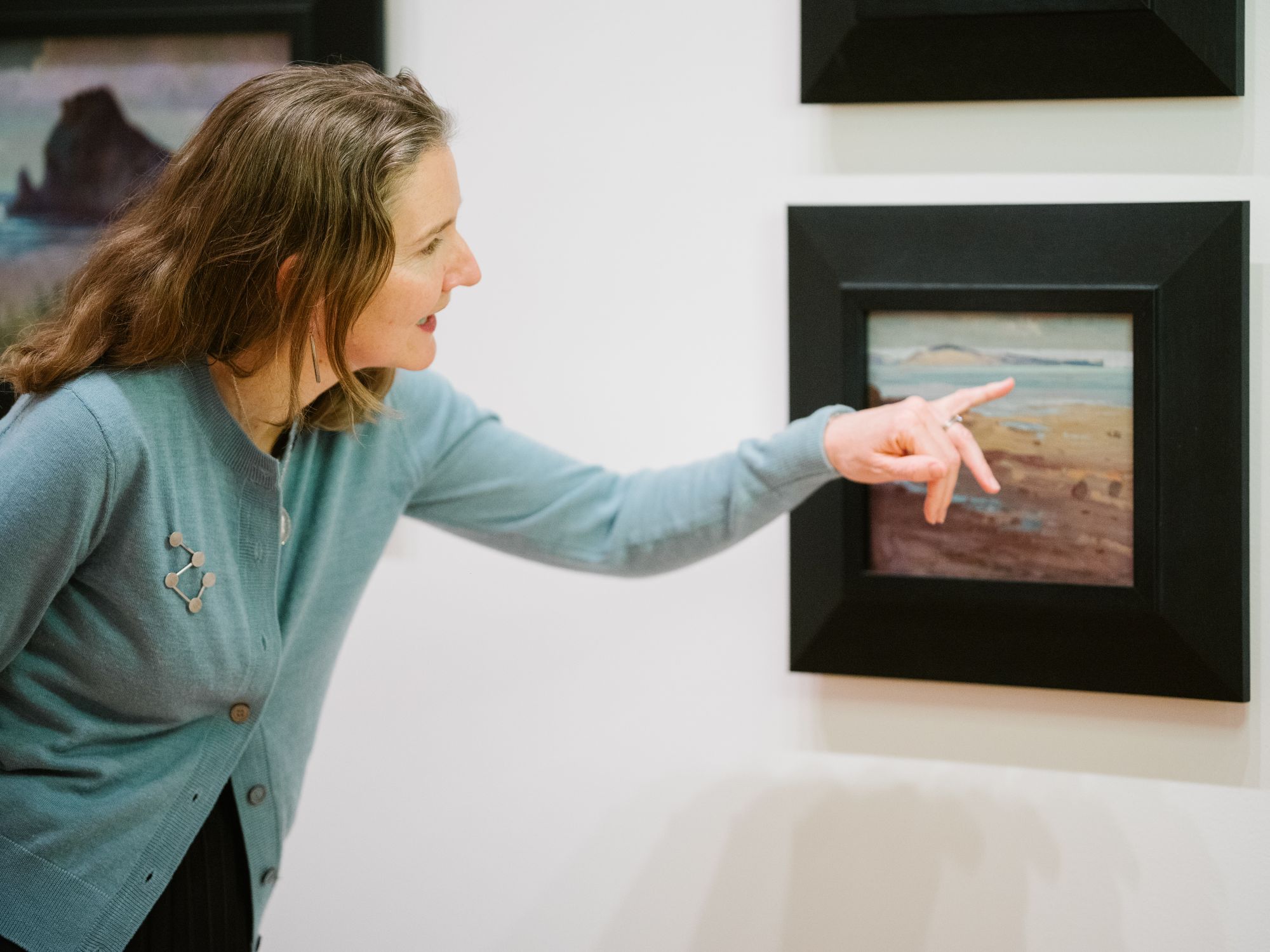
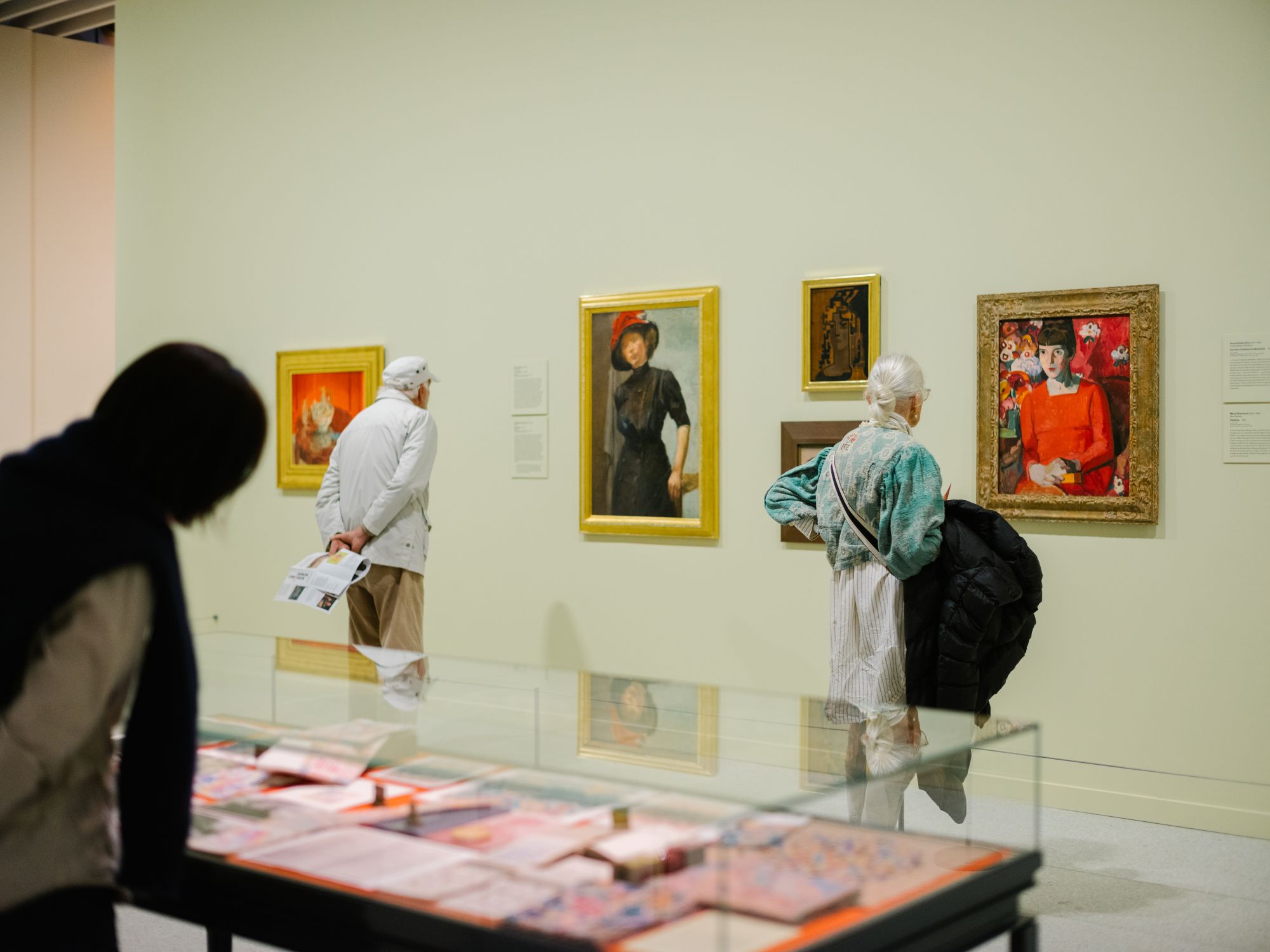
3. Ask simple questions (there are no trick answers)
You won’t need any art knowledge, but curiosity is a must.
Helpful prompts to ask yourself:
- What’s going on here?
- What do I notice first?
- Where does my eye keep returning?
- How does this make me feel?
These questions sit at the heart of Visual Thinking Strategies (VTS), a methodology used at Auckland Art Gallery that values conversation and shared looking over ‘correct’ or expert answers.
The key idea is that multiple interpretations can exist at once. It’s so very human, and that’s precisely the beauty of art.
Tip: Contemporary art is great training for this. When you can’t immediately tell what you’re looking at, curiosity works better than overthinking.
4. Let go of the idea of a ‘right’ meaning
Many visitors worry they’re missing something important. According to our curatorial team, there’s no need to give yourself that pressure.
‘There’s always something more to learn,’ says Dr Farrar. ‘Let yourself off the hook and enjoy the process.’
Waite agrees, noting that meaning isn’t fixed. Artworks aren’t puzzles with a single solution. The interpretation of an artwork might shift depending on who’s looking, when they are looking, and why they are looking.
Tip: Try looking before reading the wall label. Then read it and see what, if anything, changes.
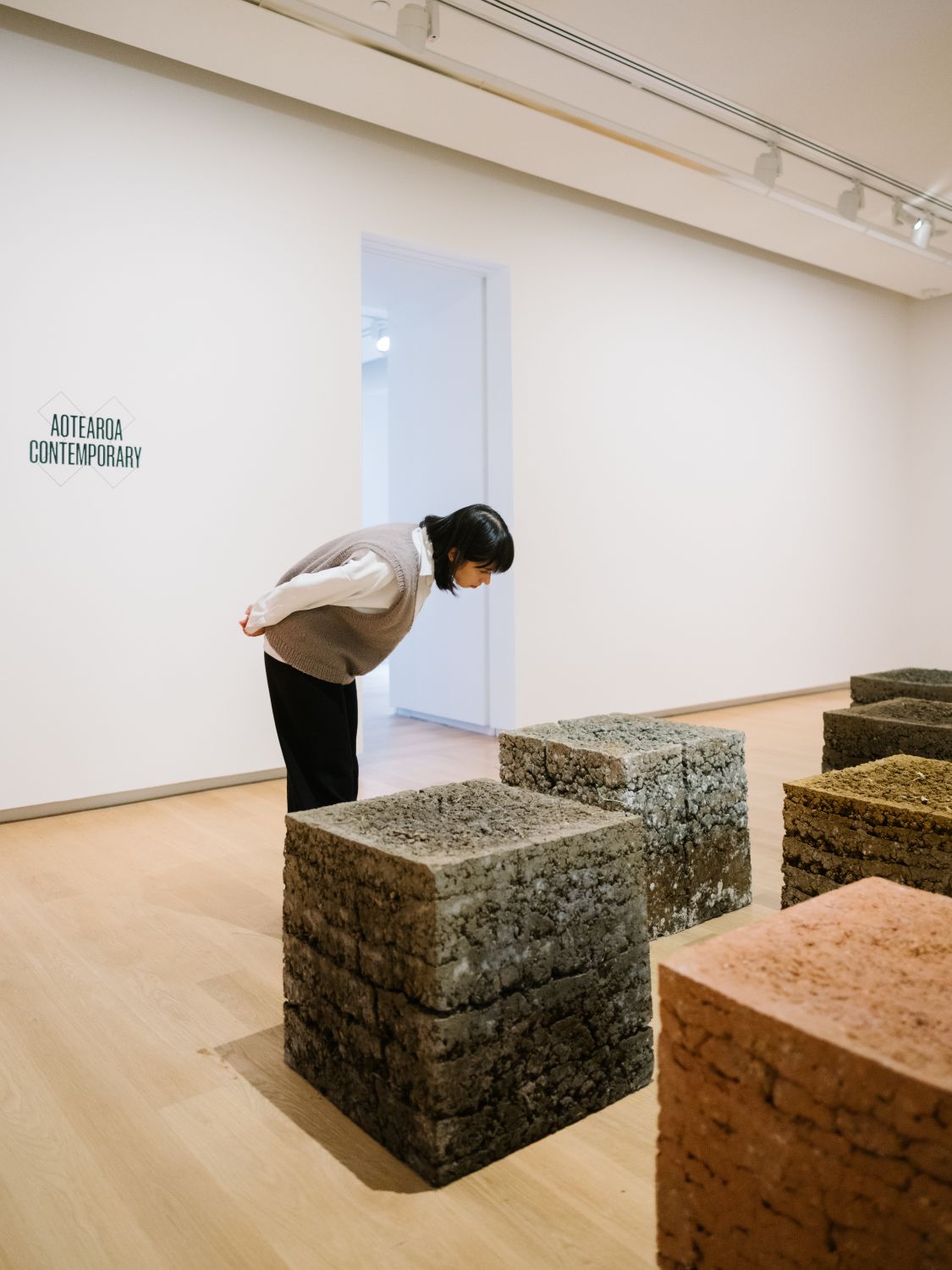
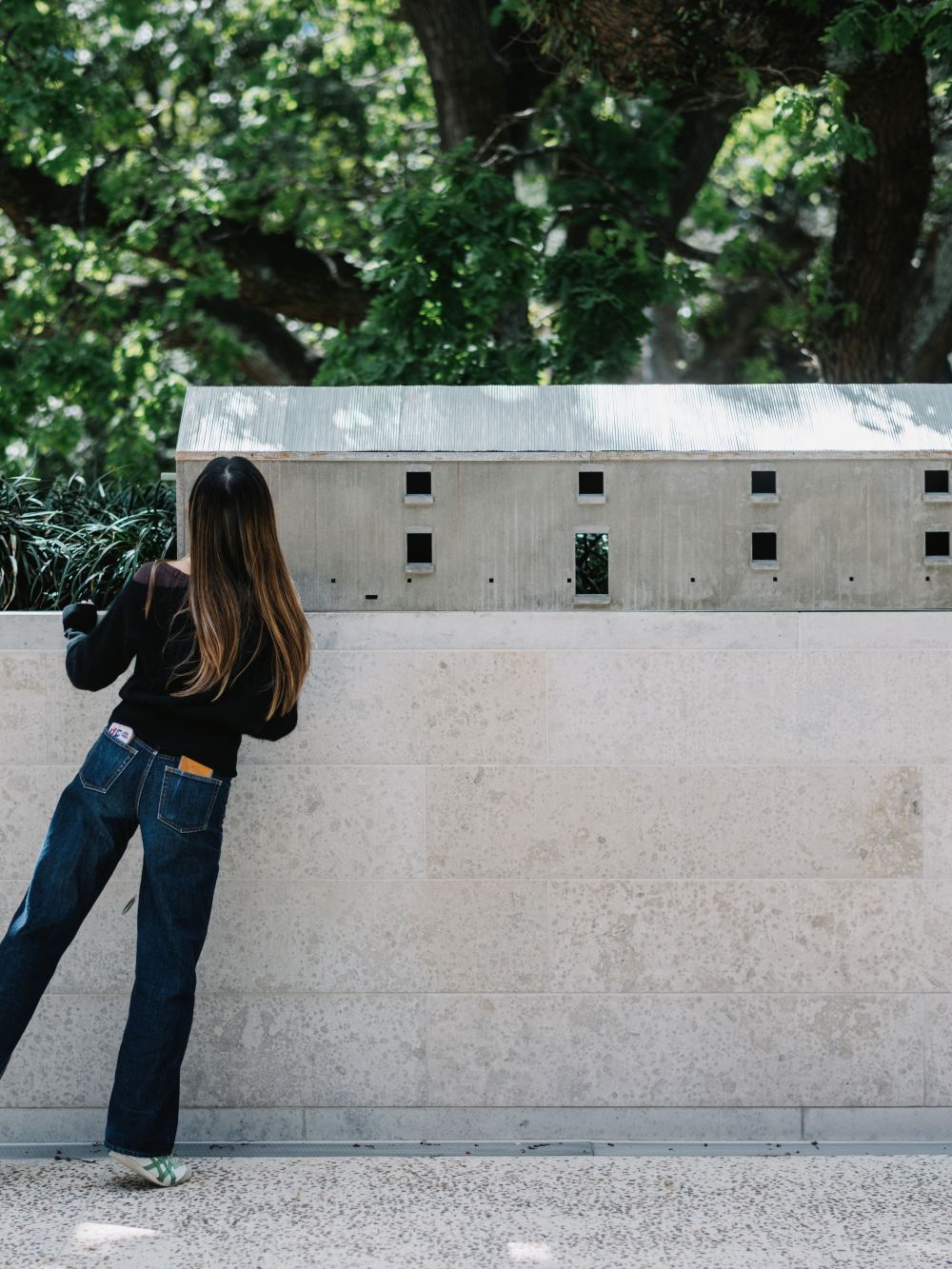
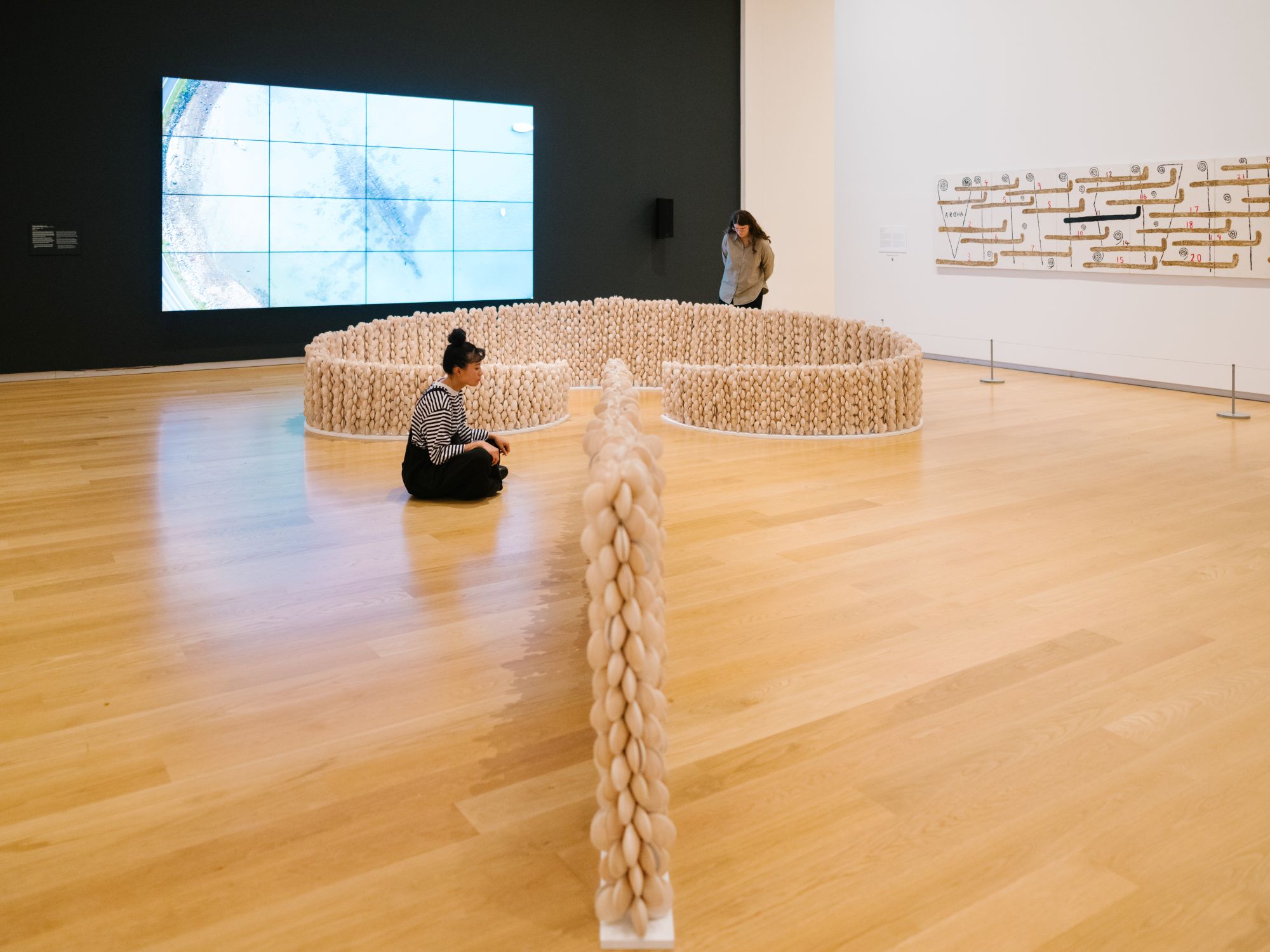
5. Use your whole body, not just your eyes
For a long time, galleries trained us to stand still, keep quiet, and look from a polite distance. But that’s changing.
It turns out that getting up close or looking from odd angles is a good thing. ‘We’re thinking much more now about full-body experiences,’ Waite says. ‘Not just intellectual ones.’
Sculpture in particular invites movement:
- Walk around it
- Notice how light and shadow shift
- Pay attention to scale and materials
Even with paintings, notice how your body responds. Do you feel calm? Energised? Unsettled? Art isn’t just something you look at. It’s something you experience.
6. Bring a mate
New Zealand curator and art writer Justin Paton explores the many ways we can approach art in his book How to Look at a Painting (2005). He has a simple-yet-effective suggestion:
‘How to sneak away from the racket of your habitual thoughts and slip sideways into the time zone of a painting? One way is to take good company.’
Looking at art doesn’t need to be solitary. In fact, bringing a friend, partner or whānau can help you notice more. You might spot different details, laugh at unexpected interpretations, or simply feel more comfortable lingering.
Try this:
- Visit with a mate and choose one artwork together
- Take turns saying what you notice (no filtering, no fact-checking)
- Let the conversation wander
Sometimes, the best way to prompt your own thoughts is to let someone else’s perspective in.
Tip: Both books we've talked about here – Ways of Seeing, and How to Look at a Painting – are available to read in our library. Stop by, peruse the shelves and get stuck into one of these books if you'd like to learn more.
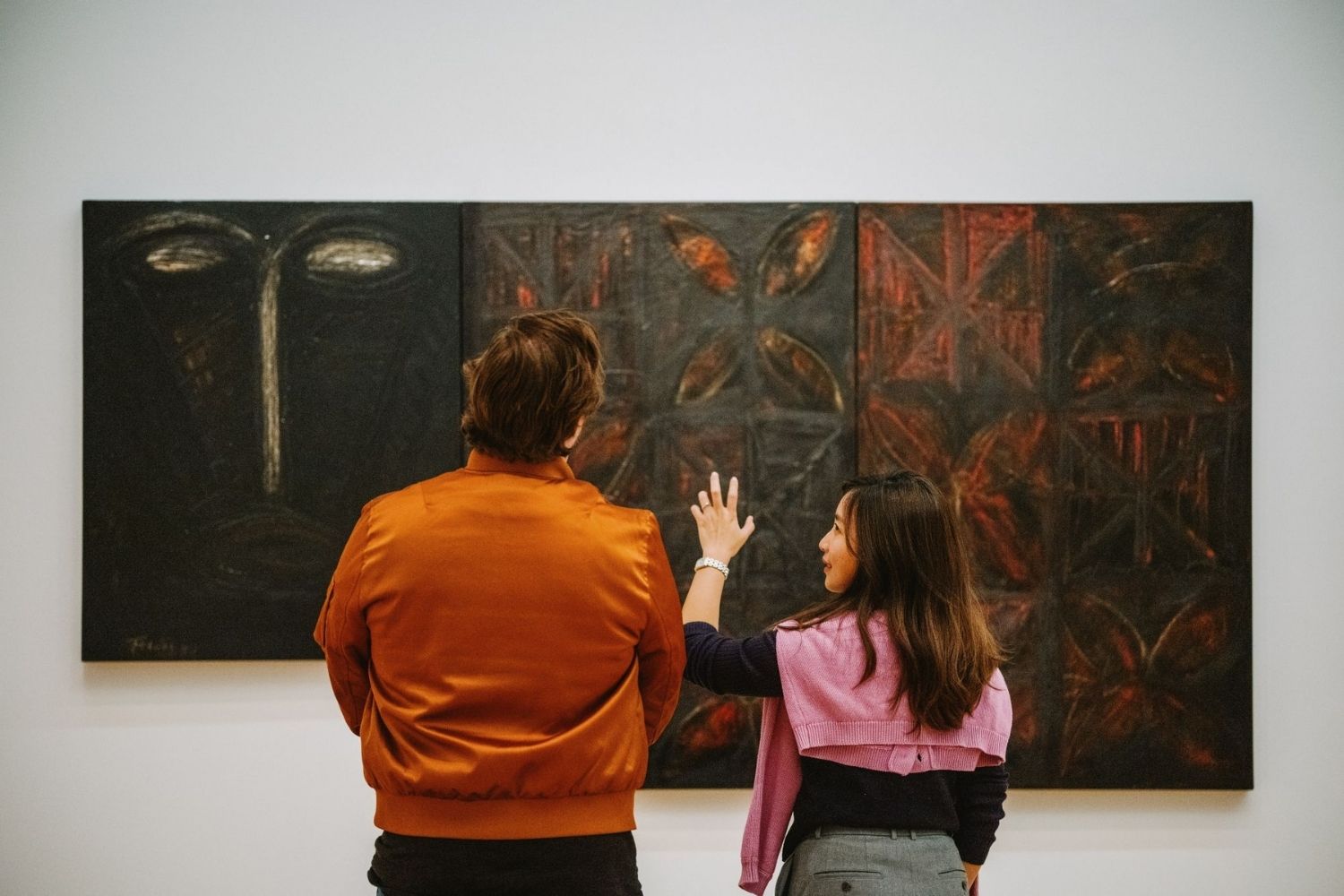
Sometimes, art is better when shared.
Artwork credit: Fatu Feu‘u, The Ancient Mariner, 1992–93, Auckland Art Gallery Toi o Tāmaki, purchased 1993.
7. Don’t hesitate to move on (or take a rest)
Visiting an art gallery doesn’t have to be linear or serious. You’re not under pressure.
‘It’s important to take a pause – or several – to recharge to get the most out of a Gallery visit,’ says Dr Farrar.
Some of the most meaningful experiences come from:
- Spending time with one artwork rather than many
- Talking about what you’re seeing
- Taking breaks (grab a croissant at the café or wander up to the East Terrace for a birds-eye view of Albert Park)
- Coming back another day
If an artwork doesn’t connect? Move on. You can always return.
The bottom line? Art is for everyone
You don’t need expertise to enjoy art. Even a single sensory or emotional experience counts.
Trust your instincts, take your time, and remember: there’s no ‘right’ way to experience art.
Your cheat sheet for your next Auckland Art Gallery visit
- Stop trying to be smart or feel you need to ‘get’ the artworks.
- Look longer than feels comfortable.
- Ask yourself simple questions about the artworks.
- Try a different angle, and walk around sculptures.
- Read the artwork label last!
Curiosity is more than enough. Browse our latest exhibitions and start planning your visit today.