Does life feel stranger and faster than ever? This is the exhibition you need right now Meet Forever Tomorrow
There’s a feeling you already know – the moment the world started moving faster than you could keep up. The endless scrolling. The flood of headlines. Information overload. The sense that everything is changing all at once.
Forever Tomorrow: Chinese Art Now at Auckland Art Gallery Toi o Tāmaki turns that feeling into something you can see, hear and experience, and reminds you that you are not alone in it.
Bringing together 42 leading Chinese contemporary artists and artist collectives, Forever Tomorrow features artworks that trace the impact of acceleration – and the search for meaning within its wake.
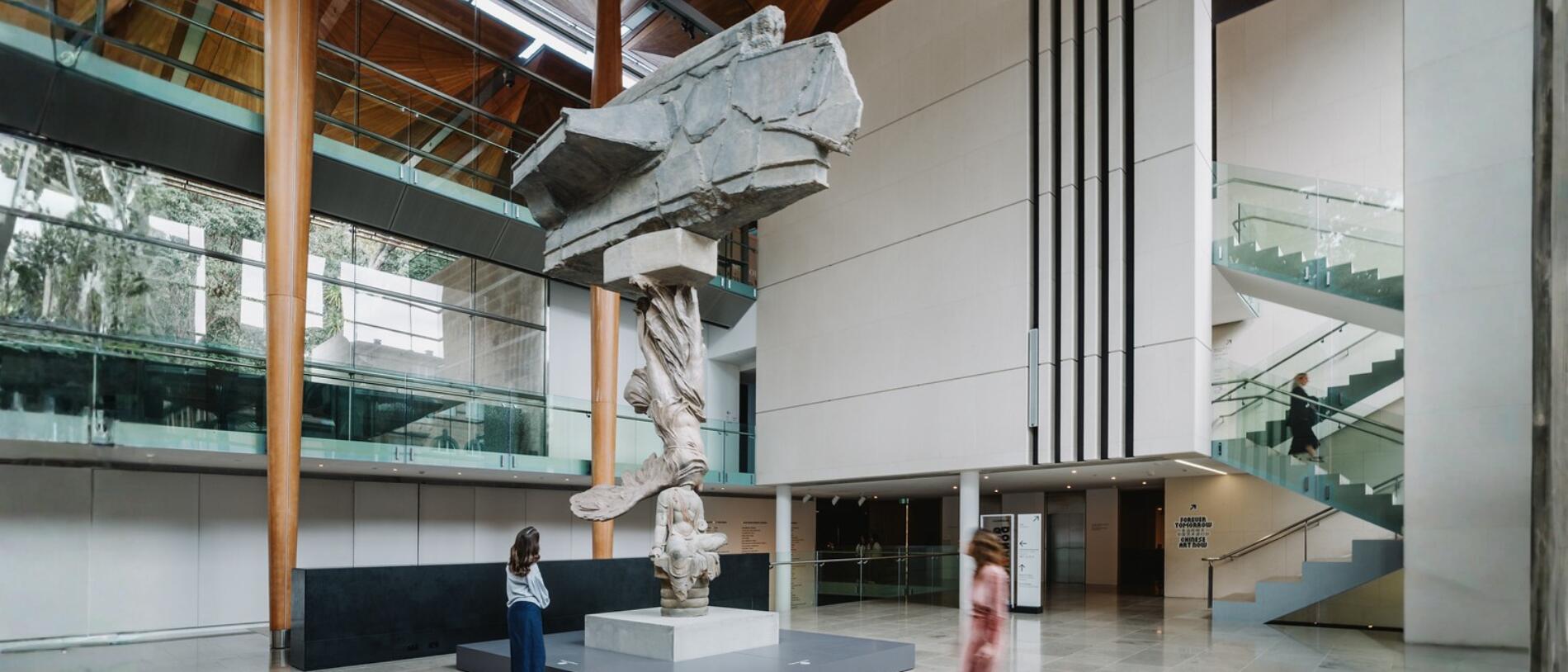
XU ZHEN ®, Eternity - Tianlongshan Grottoes Bodhisattva, Winged Victory of Samothrace, 2014, (installation view), on loan from Xu Zhen Studio, supported by the Auckland Contemporary Art Trust.
A world that changed faster than people could follow
The works in Forever Tomorrow are rooted in a specific and extraordinary moment in China’s recent history, when the country began opening its economy to the world. From 1978, an era of economic and social reform known as ‘Reform and Opening Up’ launched one of the fastest social transformations any country has ever experienced.
Fishing villages quickly became megacities. Millions moved. Old certainties about work, family and identity dissolved. Artist Cao Fei has a phrase for it: ‘super developing’, a state in which urbanisation, economic growth and social change move so fast that culture simply cannot keep pace.
That phrase could just as easily describe the world many of us are living in right now. Forever Tomorrow doesn’t resolve these tensions. Instead, it asks us to pay attention to them – in the small disruptions of everyday life, the unease created by technology and media, the lasting influence of ideology, and the fragile ways people work to make connections in times of rapid change.
Rather than smoothing over these frictions, the artists make them visible, revealing both the pressures and possibilities of living in a world changing faster than we can fully understand.
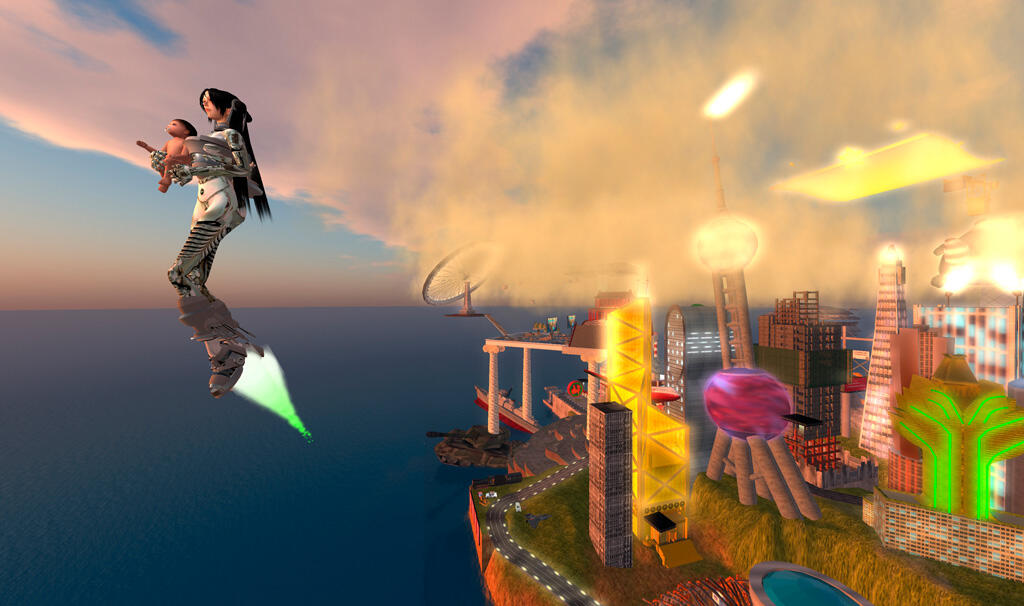
Cao Fei (SL avatar: China Tracy), i.Mirror, 2007, rrom the RMB City project (2007–11), Machinima, single-channel video, 4:3, colour with sound, courtesy of the artist, Vitamin Creative Space and Sprüth Magers.
Art that meets you where you are
In a fast-paced world where it can feel impossible to process all that is happening, Forever Tomorrow offers you moments to navigate the world and consider new ways of living.
The artworks’ mediums are wide-ranging – painting, photography, sculpture, video, installation, digital work. But no prior knowledge of contemporary art is needed. The act of simply standing still and looking will connect you with the works.
Four artists to look out for
One of the first things that strikes you in this exhibition is how varied the artists’ responses are, and how immediately recognisable their concerns feel.
XU ZHEN®
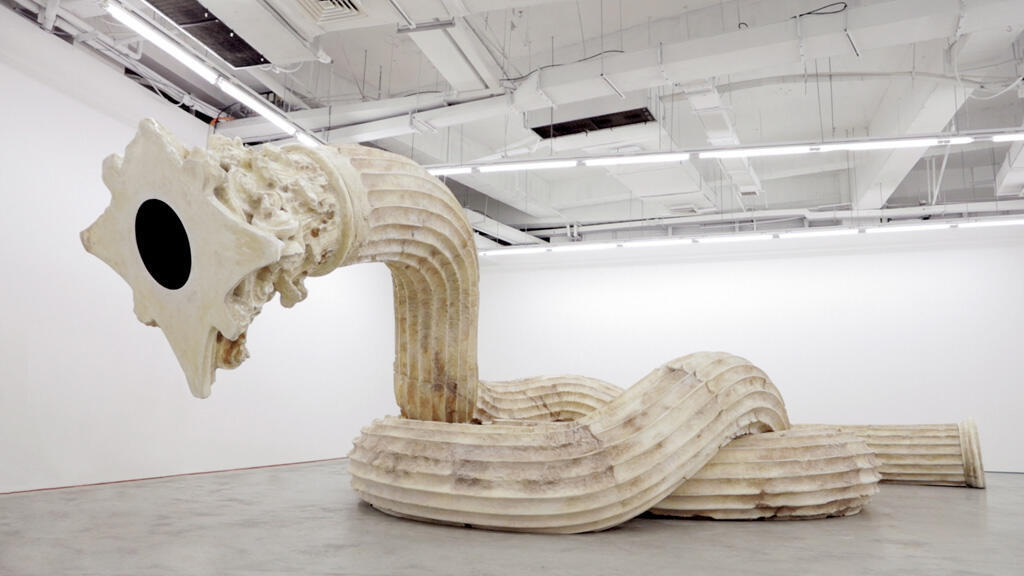
XU ZHEN®’s “Hello”, 2018–19 is a robotic sculpture inspired by ancient Greek columns that slowly responds and watches you as you move through the Gallery. It’s unsettling in the best way. XU is interested in how cultures inform and influence each other. The work recalls German philosopher Friedrich Nietzsche’s observation that ‘if you gaze long enough into an abyss, the abyss will gaze back into you’.
Miao Ying
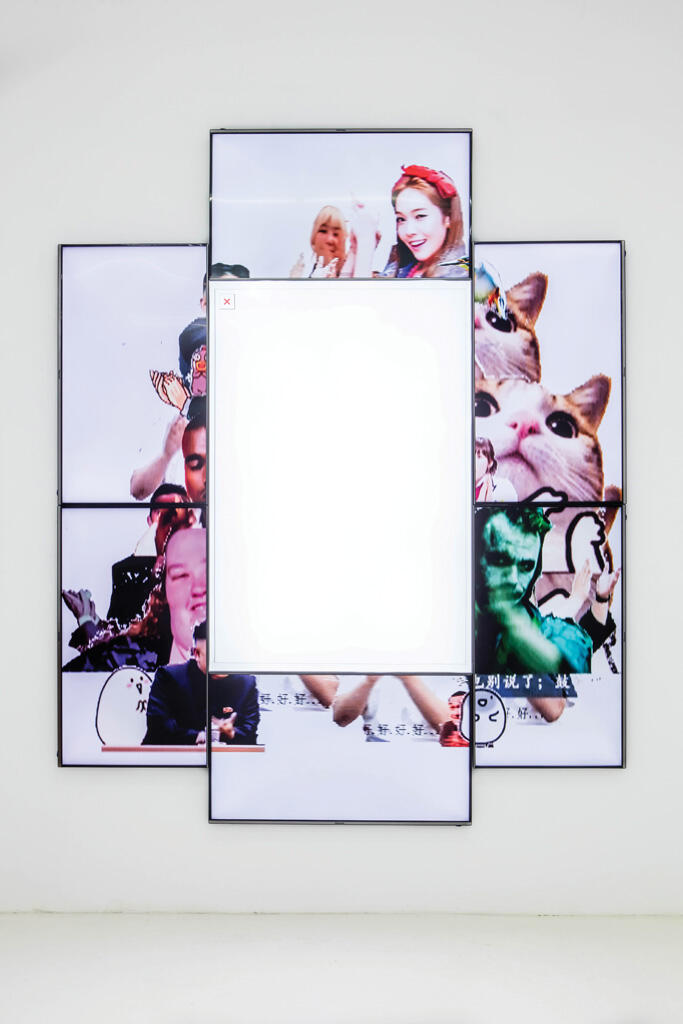
Miao Ying’s Problematic GIFs – No Problem At All, 2016 is a compilation of popular GIFs – looping images of applause sourced from WeChat are stripped of their central content and replaced by a blank ‘x’, indicating a failed load. It’s an everyday experience for Chinese internet users as the ‘Great Firewall’ removes banned content as quickly as it can be uploaded. Miao, who describes herself as living ‘on the internet’, has developed what she calls Chinternet Stockholm Syndrome, working not just with what is available but also with what is missing.
Ai Weiwei
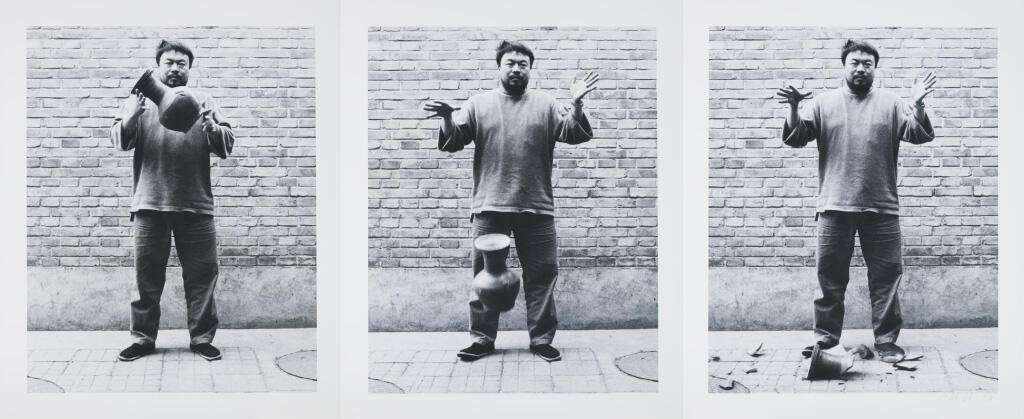
Ai Weiwei – activist, artist and outspoken advocate of human rights – is represented with Dropping a Han Dynasty Urn, 1995, 3 photographs capturing the moments he drops a 2000-year-old artefact, which shatters on the ground. It’s a deliberately provocative act. Some call it desecration. Ai’s response: ‘Chairman Mao used to tell us that we can only build a new world if we destroy the old one.’ The work asks who gets to decide what is valuable, what is preserved, and what gets to change – questions that resonate far beyond China.
Lu Pingyuan
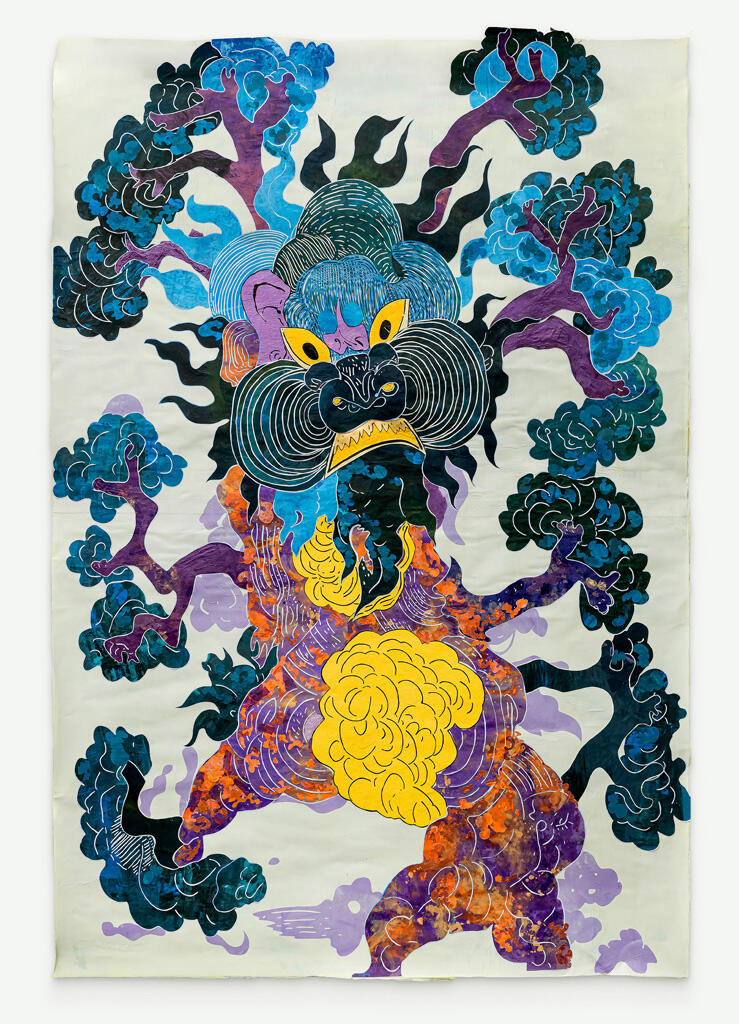
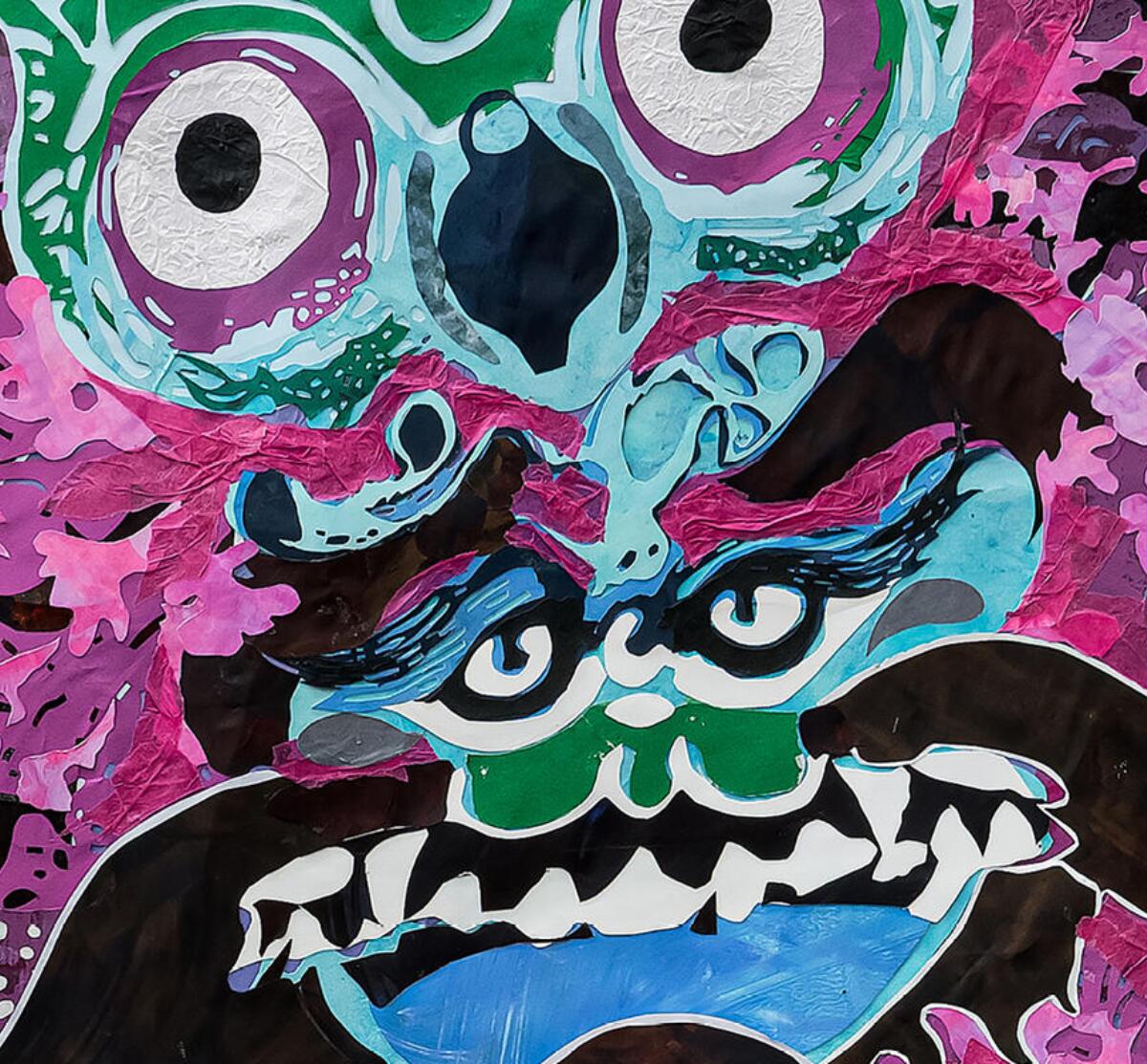
Then there is Lu Pingyuan’s monumental King of the Underground Peonies, 2024, a 2-by-3-metre work that stops you in your tracks. Lu views artificial intelligence as a new kind of belief system, posing questions to it as though consulting an oracle. He feeds AI images of ancient Chinese mythological figures, then translates AI’s hallucinations using traditional Chinese papercutting techniques. The resulting work is visually stunning: layered, strange, humorous and profound. It sits at the intersection of ancient ritual and machine logic and asks what it means to have faith when the ‘god’ you are talking to was trained on data.
A way to slow down
The exhibition is not a celebration of acceleration, or an argument that change is either good or bad. It holds the contradictions open – the possibility and the cost, the freedom and the disorientation.
Forever Tomorrow: Chinese Art Now will not tell you how to fix the feeling that life has become too fast and too strange. But it will show you how others – artists working in one of the world’s most rapidly changing societies – have felt it, and made something compelling from it.
Forever Tomorrow: Chinese Art Now is on now until 23 August 2026 at Auckland Art Gallery Toi o Tāmaki. The exhibition features paintings, photography, sculpture, video, mixed and new media by artists including Ai Weiwei, Xu Zhen, Xiao Lu, Yang Fudong, Lu Pingyuan, Pu Yingwei, Xiyadie, Wang Tuo and more.