The art of making something your own Lu Pingyuan and Shane Liu on food, art and identity
Artist Lu Pingyuan from Forever Tomorrow: Chinese Art Now and Shane Liu, owner of beloved Auckland restaurant Sumthin' Dumplin' sit down to chat about how food, art and cultural tradition shape our identities.
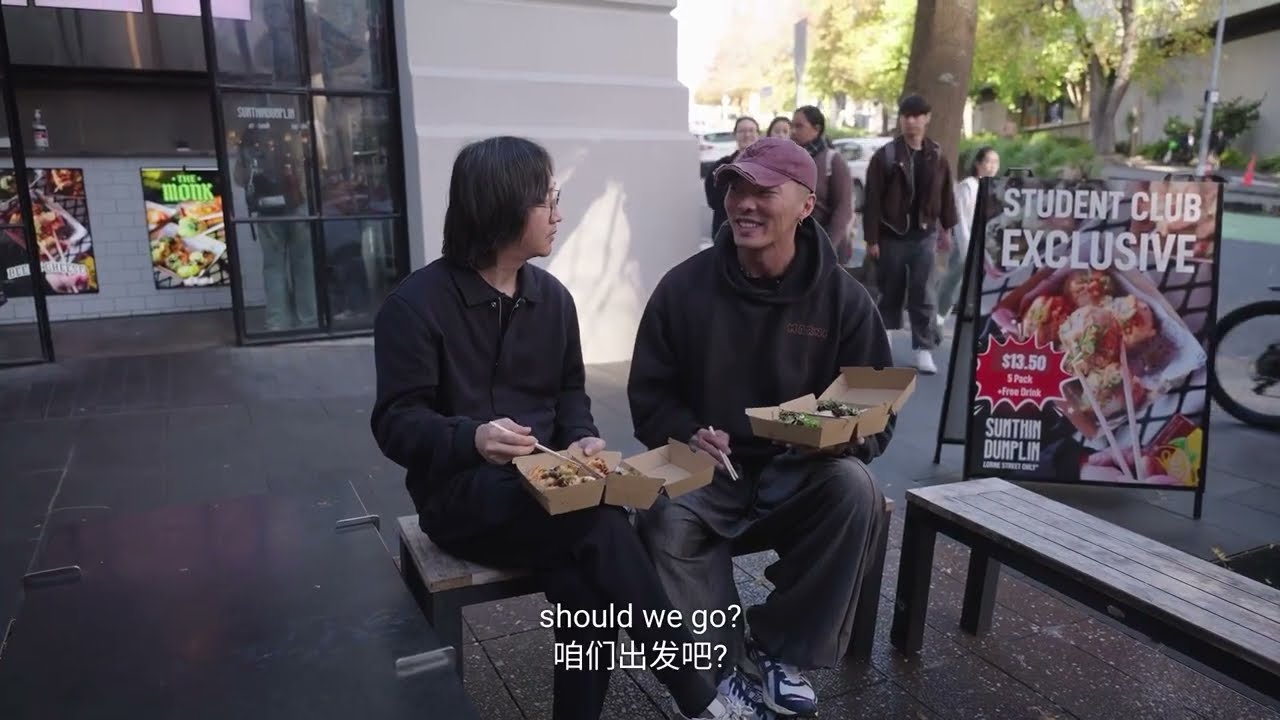
Walk into Sumthin' Dumplin' on Auckland’s Lorne Street and you'll get the sense straight away that while the food may be rooted in Chinese tradition, the brand tells a broader story. There are traces of family history, hip-hop culture, Tāmaki Makaurau Auckland, and the Māori and Pacific communities that have shaped founder Shane Liu's life.
'When I designed Sumthin' Dumplin', I based it on my identity,' Shane explains.
When artist Lu Pingyuan visited the restaurant during his time in Auckland, he noticed the same thing.
'I sensed the coalescence of many cultures the moment I stepped into this store, ' he says.
That observation becomes the starting point for a conversation that stretches well beyond food. It opens bigger questions about creativity, influence and what it means to inherit a culture while also reshaping it. For both Shane and Pingyuan, creativity isn't about preserving tradition exactly as it was handed down, but about transforming it into something personal.
More than the sum of its ingredients
Food is one of the easiest and most memorable ways we experience culture. Recipes travel across generations. Techniques carry stories and traditions. Ingredients connect us to places and people. But as Shane's dumplings demonstrate, culture is rarely static.
A dish might begin with one tradition, absorb influences from another, and eventually become something entirely new. The same could be said for contemporary art.
Reflecting on the relationship between food and creativity, Pingyuan describes both as experiences shaped by memory, technique and cultural exchange.
'The act of fusing them is in actuality a form of creative endeavour not too different from that of contemporary art,' he says.
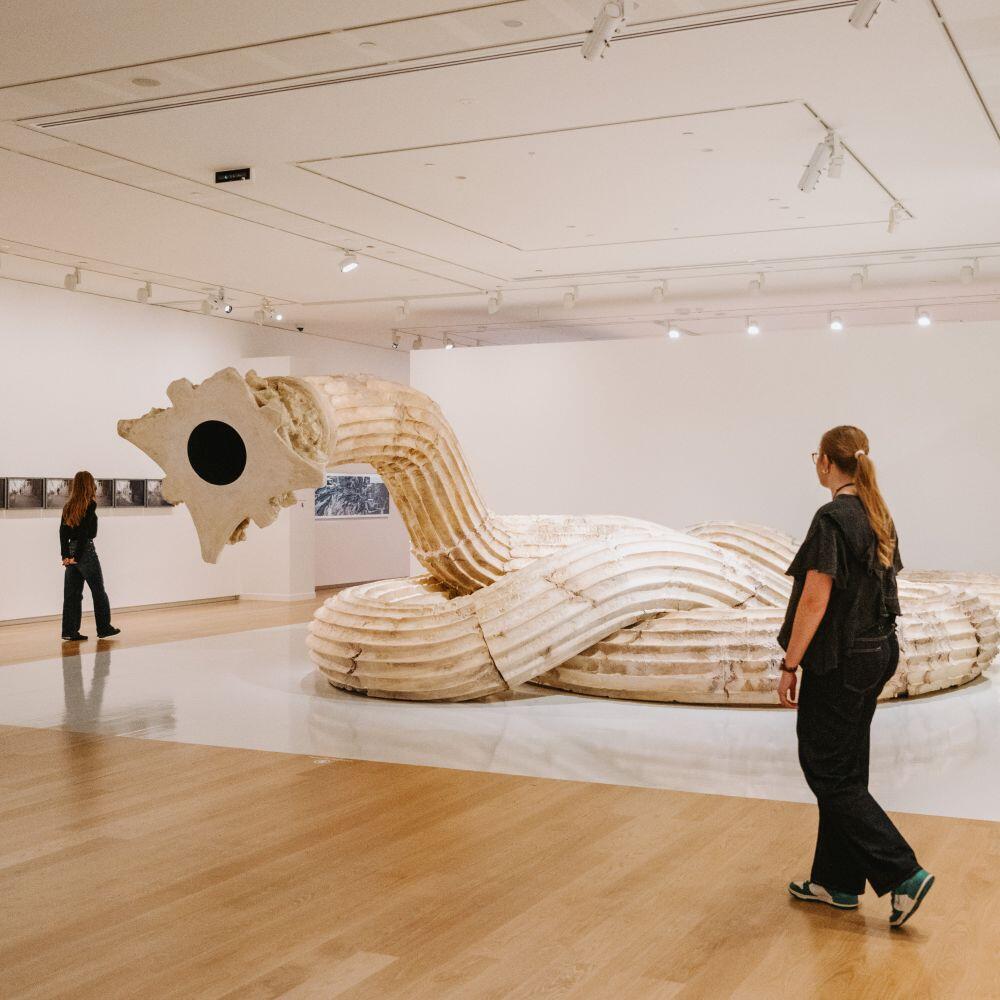
It's this idea that sits at the heart of Forever Tomorrow: Chinese Art Now. Throughout the exhibition, artists draw on inherited traditions while responding to the realities of contemporary life. The result isn't a rejection of the past, but a conversation with it. Like a recipe that evolves over time, culture remains alive because people continue to reinterpret it.
Ancient traditions, imagined futures
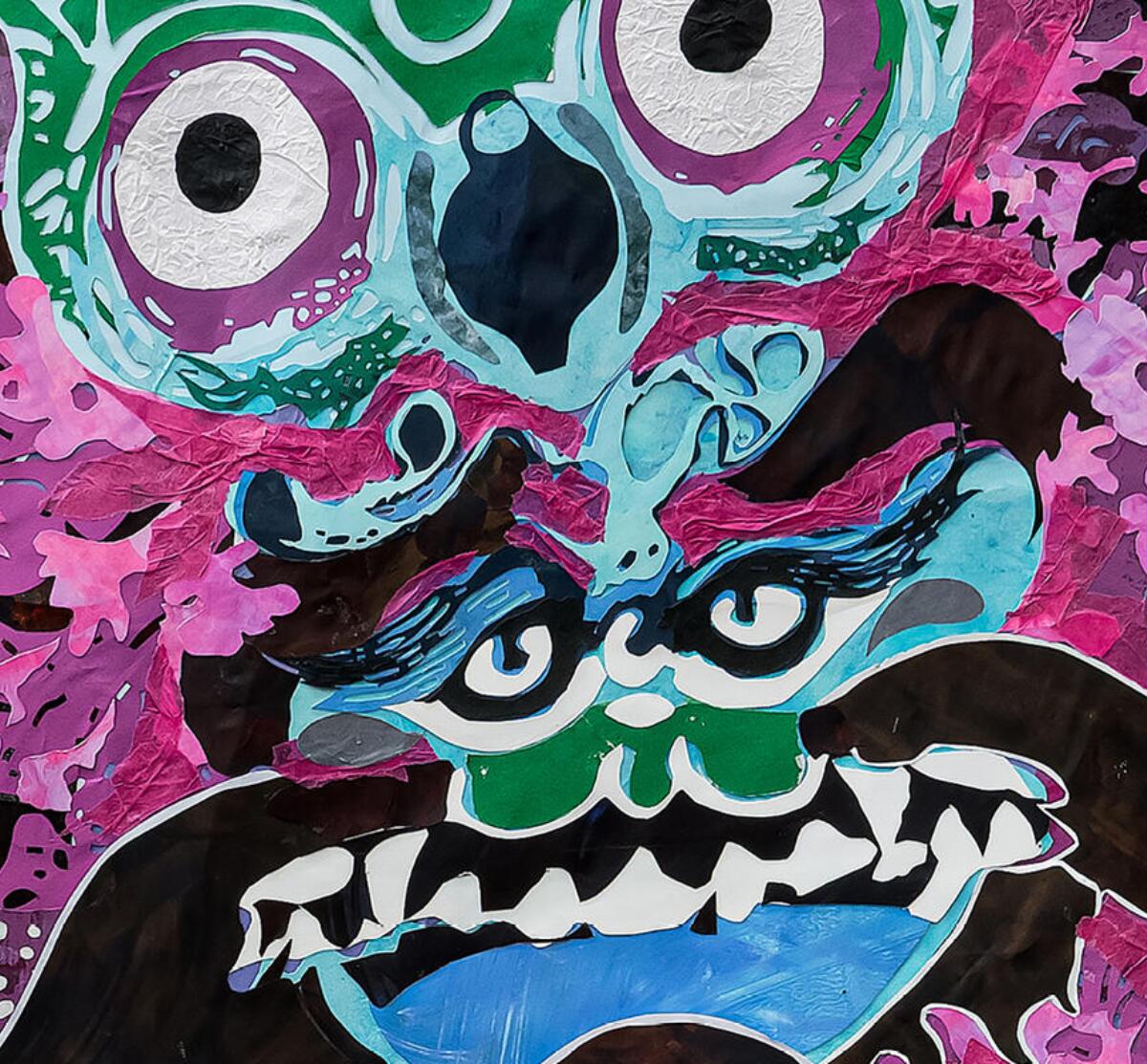
That process is especially visible in Pingyuan's work. For Forever Tomorrow, Pingyuan brings together influences that seem worlds apart: Chinese folk religion, mythology, digital culture, contemporary technology and the centuries-old craft of Chinese papercutting.
His works begin with imagined 'new age deities' generated through artificial intelligence. But rather than leaving them as digital images, Pingyuan painstakingly translates them into intricate papercut forms using traditional techniques.
At first glance, the works resemble traditional folk imagery. Look closer and unexpected details emerge. These aren't historical gods or mythological figures preserved from the past. They're entirely new creations, assembled from fragments of visual culture, belief systems and contemporary imagination.
The tension between old and new is deliberate. Rather than presenting tradition as fixed, Pingyuan treats it as something fluid and capable of adapting, absorbing influences and taking on new forms. The works ask what happens when inherited cultural practices encounter rapidly changing technologies, and whether new forms of belief might emerge.
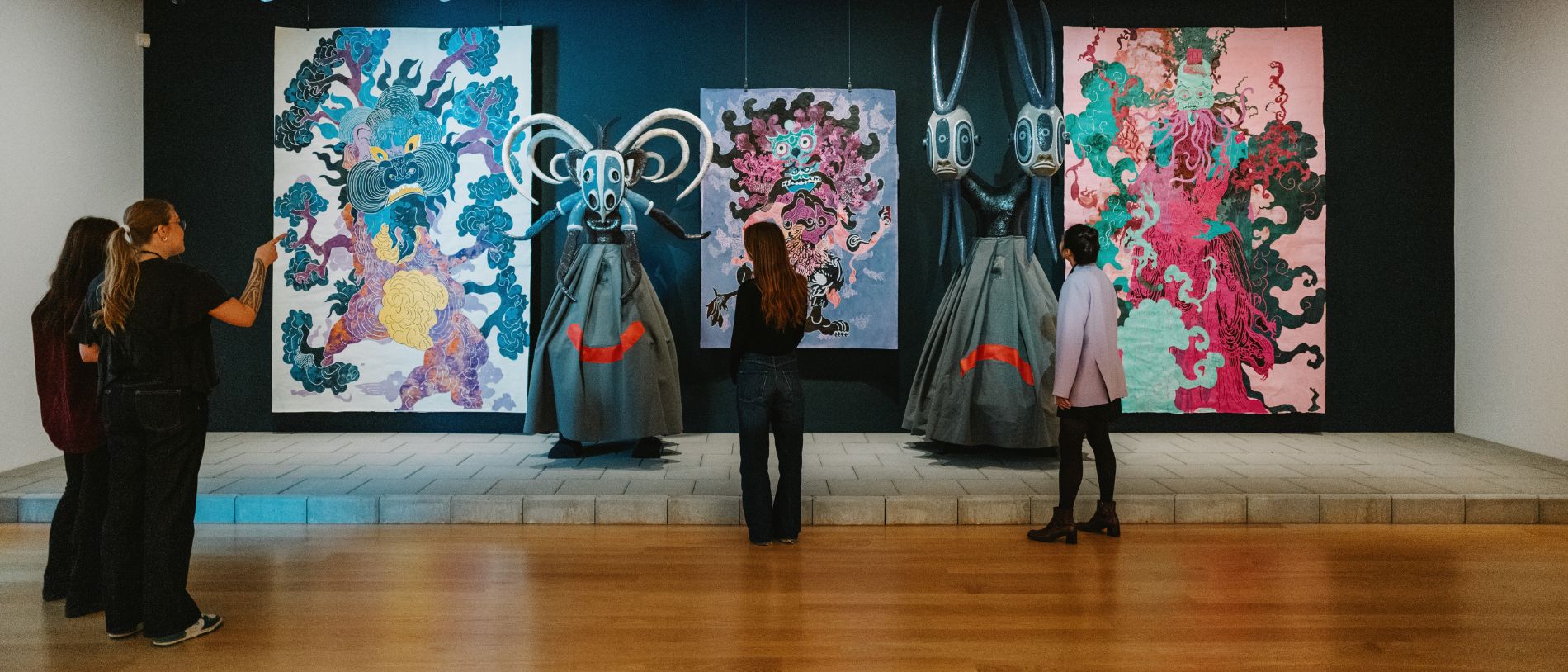
Pingyuan's works in Forever Tomorrow begin with imagined 'new age deities' generated through artificial intelligence. But rather than leaving them as digital images, Pingyuan painstakingly translates them into intricate papercut forms using traditional techniques.
Artwork credit: Lu Pingyuan, background left to right – King of the Underground Peonies, Doppelganger, Purple Smoke Fairy, foreground left to right – The Clawed Forefather of Executions, The Ancestor God of the Sheep, mixed media, 2024 (installation view).
Identity is never just one thing
Although Shane and Pingyuan work in very different mediums, both explore a similar idea: identity isn't something fixed or singular.
Shane's creative world is shaped by Chinese heritage, Auckland neighbourhoods, music, friendships and community. Pingyuan's work draws from traditional Chinese culture while also embracing influences from animation, global mythology, popular culture and contemporary life. Neither sees contradiction in that mix. Instead, outside influences become part of the creative process itself.
Their conversation suggests that cultural identity becomes richer through exchange. New influences don't replace existing traditions, but rather they create opportunities to reinterpret them. The result is work that feels grounded in cultural history while speaking directly to the present moment.
Following your curiosity
Contemporary art can sometimes seem unfamiliar or challenging at first, particularly if you're worried about not understanding it. Pingyuan takes a different view: 'People are naturally drawn to the unknown,' he says.
Keep in mind that curiosity is often more enriching than expertise. You don't need prior knowledge of Chinese contemporary art to engage with Forever Tomorrow. And like a memorable meal, it's worth being open to trying something new.
The exhibition invites visitors to explore uncertainties rather than search for definitive answers. What happens when technology reshapes tradition? How do cultural identities evolve? What forms of belief emerge in rapidly changing times?
There are no easy answers to these questions, but they are ones that many of us are already navigating.
A conversation about the future
Forever Tomorrow: Chinese Art Now brings together artists responding to an accelerated world. Through themes of technology, belief, identity and cultural transformation, the exhibition explores what the future feels like, and how people make meaning within it.
The conversation between Shane Liu and Lu Pingyuan offers a reminder that creativity begins with the familiar: a recipe, a tradition, a story passed down through generations.
Just as a dumpling can become a reflection of a life lived between cultures, art can become a space where old ideas are reshaped, remixed and imagined anew.
Forever Tomorrow: Chinese Art Now is on now until 23 August 2026 at Auckland Art Gallery Toi o Tāmaki. The exhibition features paintings, photography, sculpture, video, mixed and new media by artists including Ai Weiwei, Xu Zhen, Xiao Lu, Yang Fudong, Lu Pingyuan, Pu Yingwei, Xiyadie, Wang Tuo and more.