Artwork Information
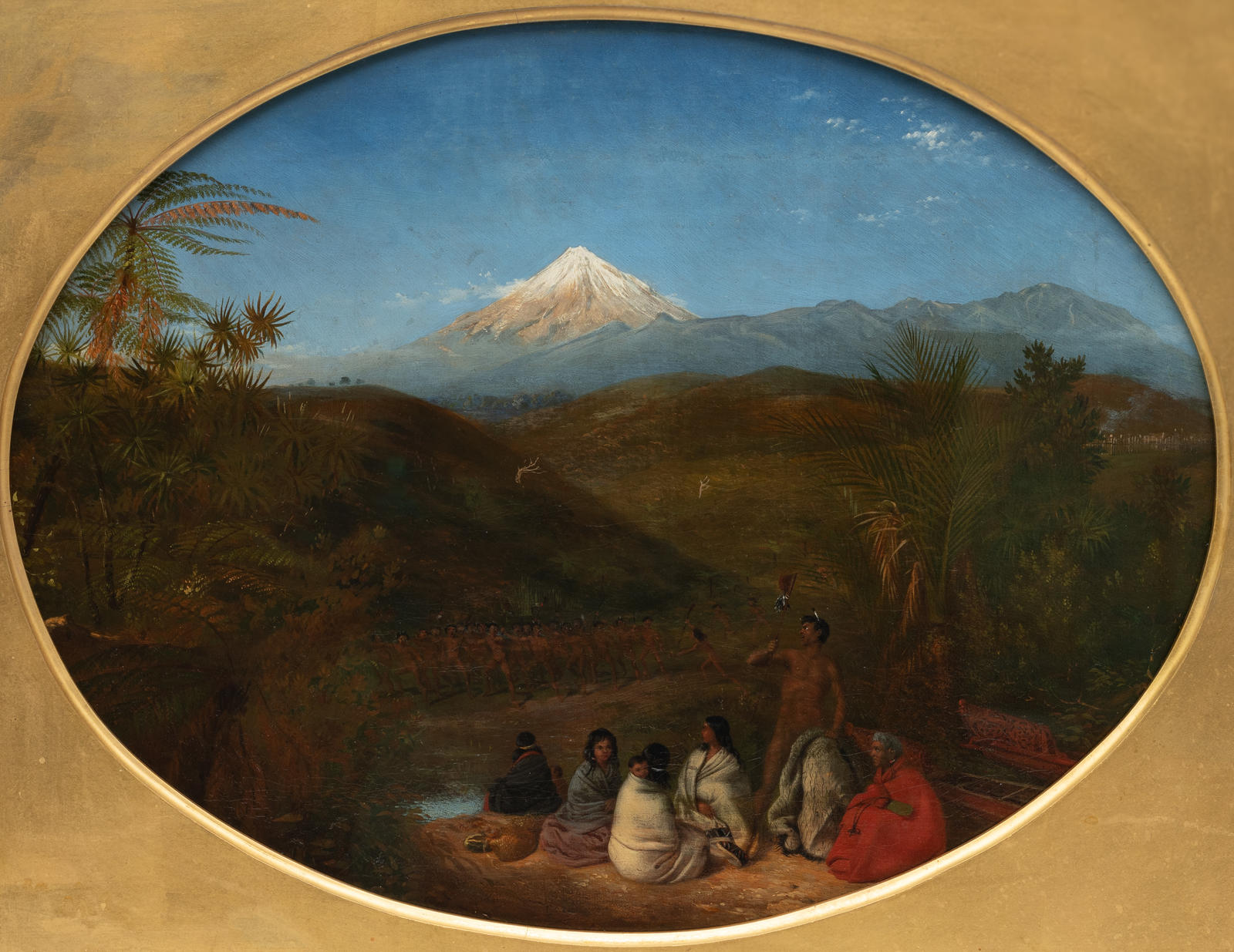
This is thought to be the earliest oil painting of a haka. It predates the New Zealand Wars in Taranaki by three years, offering a possible glimpse into the tensions among Māori that the unceasing Pākehā demand for land caused. The artist William Strutt moved to New Plymouth in March 1855, buying a bush section at Mangorei which he intended to clear and farm. He was quickly defeated by the enormity of the task, returning to Melbourne in July 1856, but during his time there sketched portraits of local Māori, the land around Taranaki and multiple studies of men doing haka. The painting appears to record a historical moment but is instead a constructed scene based on Strutt’s sketches.
The bare, unforested land in the middle of this painting is itself an important subject. Many Pākehā settlers were angry that Māori owned this cleared whenua (land) and – to their mind – did not work it. Bishop Selwyn, in an 1855 letter addressed to Anglican Parishioners in New Plymouth, countered this view, unequivocally reminding settlers of the 10th commandment: ‘THOU SHALT NOT COVET’. This unrelenting demand for land ultimately led to war in Taranaki in 1860, with the consequent loss of much Māori whenua.
- Artist
- William Strutt
- Title
- War Dance at Taranaki, New Zealand, Mount Egmont, in the distance
- Production Date
- circa 1857
- Medium
- oil on canvas
- Dimensions
- 315 x 415 mm
- Credit Line
- Auckland Art Gallery Toi o Tāmaki, purchased with assistance from Andrew and Jenny Smith, the Lyndsay Garland Trust, Graeme Maunsell Trust, Dr Ian Wilson bequest and R.H. Berryman bequest, 2023
- Accession No
- 2023/28
- Copyright
- No known copyright restrictions
- Department
- New Zealand Art
- Display Status
- On display
More by William Strutt (1)
War Dance at Taranaki, New Zealand, Mount Egmont, in the distance
circa 1857