Choose your own adventure: Our must-see Forever Tomorrow artworks depending on your mood
Wondering what the must-see artworks are in Forever Tomorrow: Chinese Art Now at Auckland Art Gallery Toi o Tāmaki? The exhibition has something for every art personality, whether you’re drawn to bold photography, video art, traditional Chinese landscape painting or artists like Ai Weiwei and Xu Bing.
To help you decide what to see first, we asked 5 Gallery assistants to choose a Forever Tomorrow artwork they keep coming back to. Think of it as a choose-your-own-adventure guide to the exhibition: pick the mood that sounds most like you, then follow your curiosity. There’s no right way to experience the show, but here are 5 memorable places to begin.
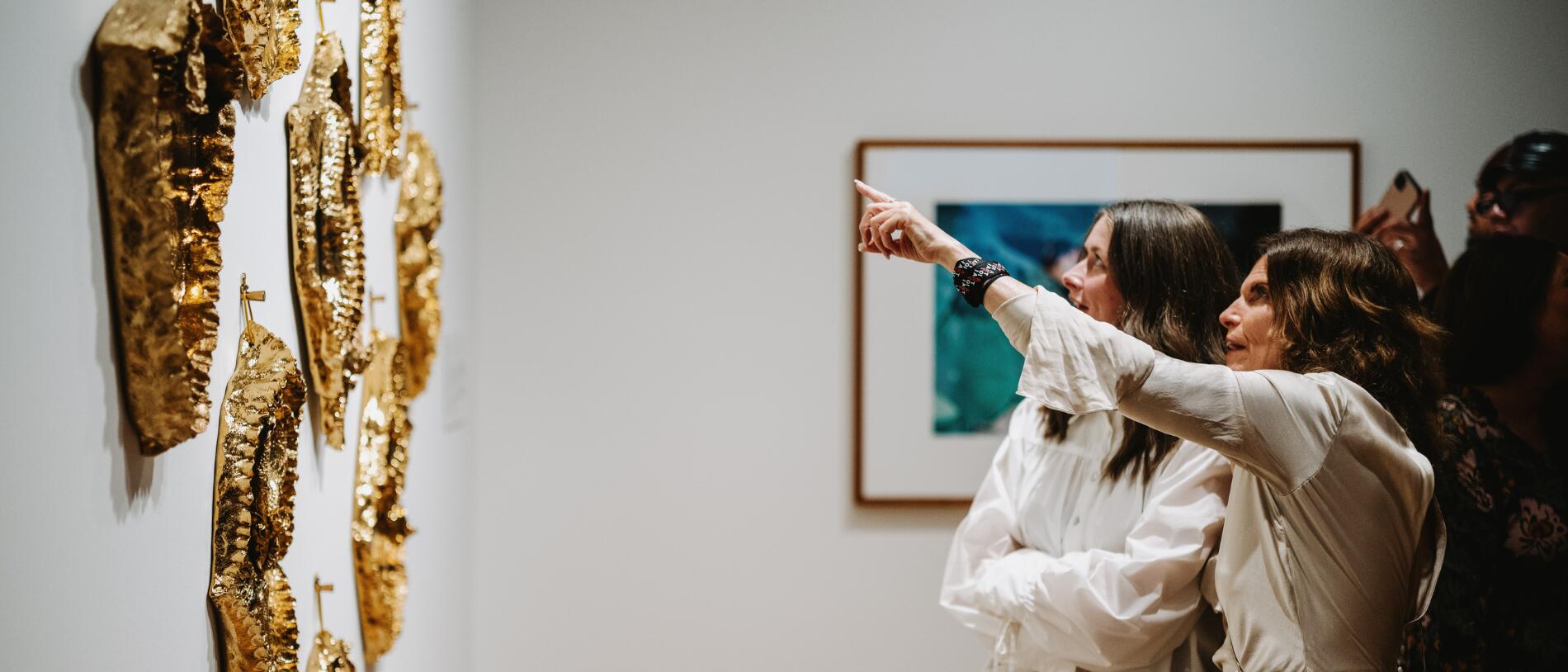
Artwork credit: Liu Xi, Our God is Great (installation view), 2021-2025, ceramic. Courtesy of the artist.
One of the joys of contemporary art is that two people can stand in front of the same work and walk away with entirely different experiences. An artwork that unsettles one visitor might delight another. A piece that initially feels confusing or unfamiliar can become the work that stays with you longest.
The Gallery assistants at Auckland Art Gallery Toi o Tāmaki witness these moments every day. They see which works make people laugh, which ones spark discussion and which stop visitors in their tracks.
And that’s the beauty of an exhibition like Forever Tomorrow: Chinese Art Now. There isn’t one ‘right’ way to view it, and you don’t need any particular knowledge about Chinese art, culture or history to walk away moved by it.
Whether you’re fascinated by technology, drawn to traditional craftsmanship, captivated by photography or simply enjoy art that challenges the way you see the world, there is something here that will reward your curiosity.
We asked 5 of our Gallery assistants to share a work from Forever Tomorrow: Chinese Art Now that they have personally connected with and why they think it deserves a little more of your time and attention.
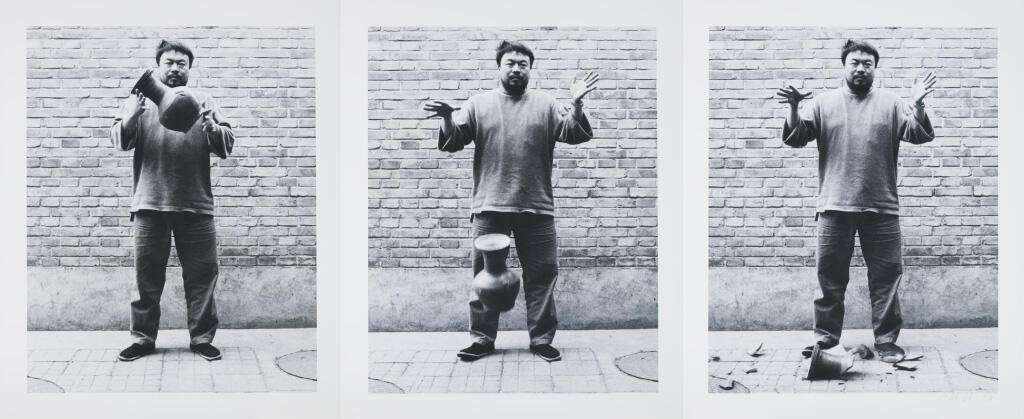
Ai Weiwei, Dropping a Han Dynasty Urn, 1995. gelatin silver prints and ceramic fragments. M+ Sigg Collection, Hong Kong. By donation. © Ai Weiwei. Image courtesy of M+, Hong Kong.
Ai Weiwei: Dropping a Han Dynasty Urn
For the person who’s ever felt the urge to press the big red button that clearly says ‘Do Not Press’.
---
Gallery assistant Charlie first encountered Dropping a Han Dynasty Urn in an art history class as a teenager. The reaction it provoked was immediate.
‘My initial reaction to this piece was, “Oh my God, how could he do that?”’
Years later, seeing the work in person at Auckland Art Gallery carries the same charge.
Ai Weiwei’s famous photographic triptych documents the artist deliberately dropping and smashing a 2000-year-old Han Dynasty urn. The act feels shocking because it asks us to confront ideas we often take for granted about cultural value, preservation and destruction.
For Charlie, that moment of discomfort is precisely the point. The work opens up larger questions about what societies choose to protect, what they choose to discard, and who gets to decide.
From questions of cultural history, the exhibition moves into urgent conversations about the world we live in today. Photography becomes a powerful way of exploring the impact of human activity, inviting us to look beyond the surface of what first appears familiar.
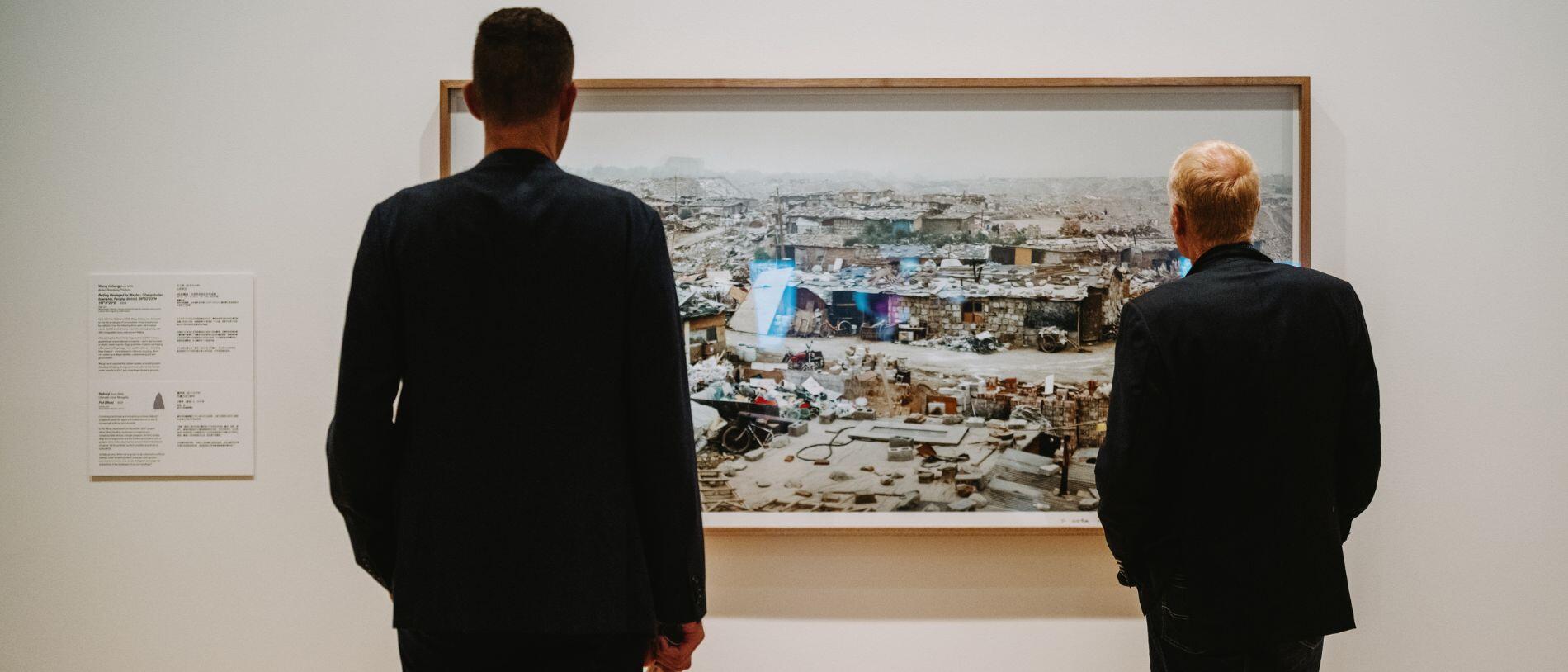
Artwork credit: Wang Jiuliang, Beijing Besieged by Waste - Changxindian township, Fengtai district, 39°52′22″N 116°11′20″E (installation view), 2009, inkjet print. White Rabbit Collection, Sydney. Donated through the Australian Government’s Cultural Gifts Program by Judith Neilson.
Wang Jiuliang: Beijing Besieged by Waste
For the person who watches one documentary, then spends the rest of the evening going down a Wikipedia rabbit hole on the subject.
---
Gallery assistant Tove was drawn first to the scale of Wang Jiuliang’s photograph, and then to its details.
From a distance, the work appears cinematic: an expansive landscape of rubble and dust. It’s only on closer inspection that another story begins to emerge. Families appear among the debris, making lives and homes in spaces created by the extraordinary pace of urban development.
For Tove, the photograph speaks to the human experiences that can disappear within larger narratives of progress and growth.
The work documents a specific moment in Beijing’s recent history, but it also invites visitors here at the gallery in Aotearoa to reflect on their own relationship with consumption, waste and the systems that sit behind everyday life.
Elsewhere, Forever Tomorrow turns its attention from the world around us to the habits and behaviours we recognise in ourselves. Through moving images, one artist explores the quiet routines, rituals and repetitions that shape everyday life.
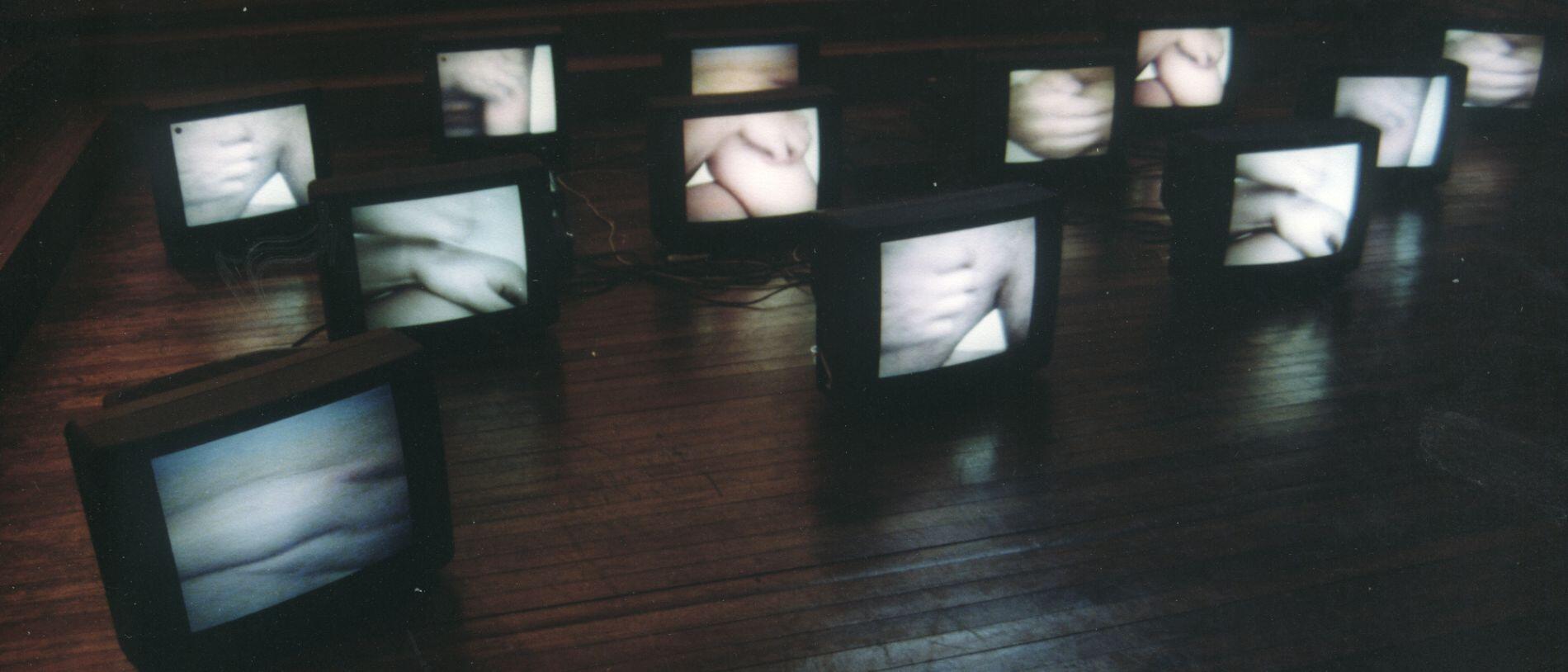
Zhang Peili, Uncertain Pleasures II, 1996, Six-channel VHS tape transferred to digital video (colour, silent) and CRT monitor. M+, Hong Kong. Image courtesy of the artist and SPURS Gallery / 图片由艺术家和马刺画廊提供.
Zhang Peili: Uncertain Pleasure II
For the person who opens TikTok for 5 minutes and resurfaces an hour later.
---
Gallery assistant Jake describes Uncertain Pleasure II as a work that visitors often recoil from before they have properly spent time with it.
The repetitive gesture at the centre of the video is uncomfortable to watch, but also strangely difficult to look away from. The longer Jake spends with the work, the more he finds himself thinking about repetition in contemporary life and the ways technology shapes our attention and our habits.
The work becomes less about the image itself and more about recognition – about the loops we willingly enter, the compulsions we indulge and the behaviours we continue even after they stop serving us.
Alongside large-scale works about technology and urbanisation are intimate moments like Pond Hug, where an everyday relationship becomes a way of exploring much bigger ideas.
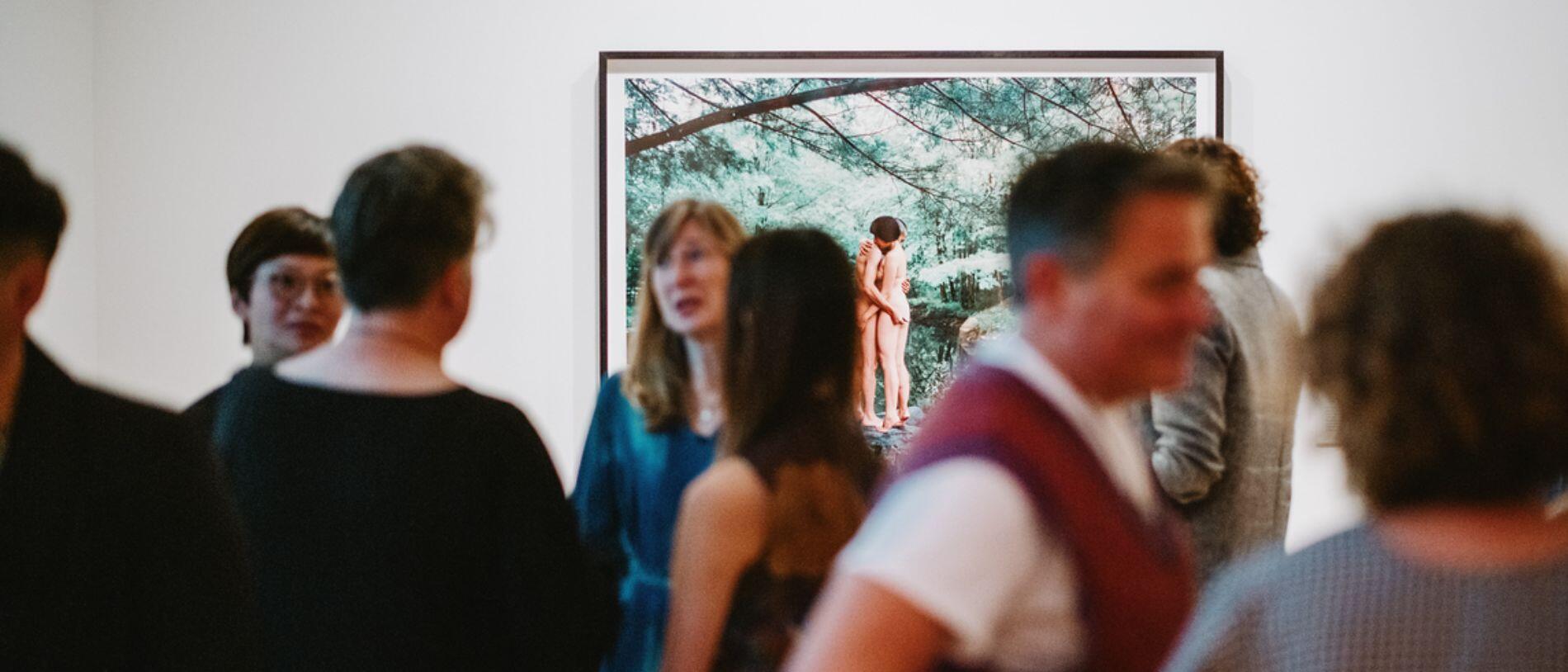
Artwork credit: Pixy Liao, Pond Hug (installation view), 2010, digital C-type print. White Rabbit Collection, Sydney.
Pixy Liao: Pond Hug
For the person who has never waited for someone else to make the first move.
---
Gallery assistant Molly chose Pond Hug by Pixy Liao for its quiet sense of calm. While many works in Forever Tomorrow: Chinese Art Now explore rapid change, technology and urbanisation, this photograph offers something softer: a peaceful moment in nature between two people.
Beneath its tranquil surface, though, Liao subtly plays with traditional ideas of masculinity and femininity, reversing the roles we often expect to see in relationships. It’s both beautiful and quietly thought-provoking, inviting you to question assumptions you may not even realise you hold.
The exhibition also reminds us that contemporary art isn’t always about creating something entirely new. Sometimes it begins by looking more closely at traditions we think we already understand, revealing fresh ways of seeing them.
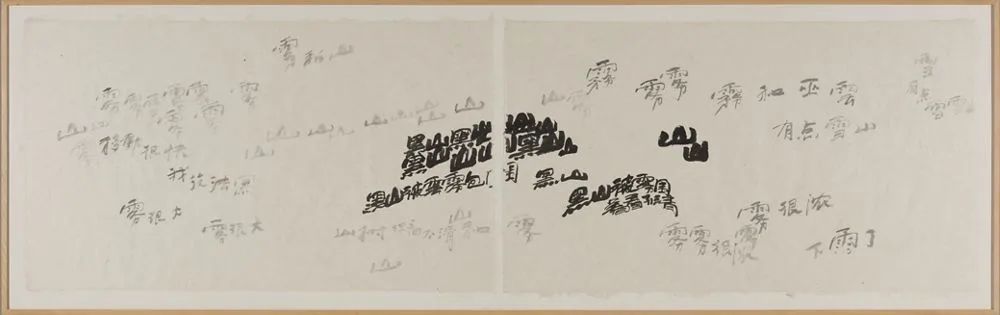
Xu Bing, Landscript for Himalayan Project, 2000, in on lokta paper. M+ Sigg Collection, Hong Kong. By donation.
Xu Bing: Landscript for Himalayan Project
For the person who is always spotting the hidden Easter eggs in movies that others often miss.
---
Gallery assistant Beth introduces Landscript for Himalayan Project by unpacking the idea at the heart of Xu Bing’s practice: the relationship between language and image. At first glance, the work resembles a traditional Chinese landscape painting, with mountains emerging through mist and clouds. Look closer, though, and you’ll discover that the landscape is composed entirely of Chinese characters.
As Beth explains, Xu Bing draws attention to the pictorial origins of Chinese characters, almost reverting written language back into image. It’s a work that invites you to pause, look again and reconsider something we thought we understood.
Discover something new at Forever Tomorrow
These five works are only the beginning. Across Forever Tomorrow: Chinese Art Now, you’ll encounter artists responding to technology, environmental change, cultural memory, relationships, language and identity through photography, sculpture, painting, installation, video and new media.
Whether contemporary art is completely new to you or something you’ve loved for years, the best way to experience Forever Tomorrow is to arrive with an open mind and enough time to follow your curiosity. And if a work leaves you with questions, don’t be afraid to ask. The Gallery assistants are always happy to share what they know, or simply point you towards the next piece that might surprise you.
Explore Forever Tomorrow before it's gone with $10 tickets
Forever Tomorrow: Chinese Art Now close on 23 August 2026 and tickets are now $10; children and Members go free. The exhibition features something for every type of adventure from paintings, photography, sculpture, video, mixed and new media.
You may also like
The art of making something your own
26 Jun 2026
Watch video
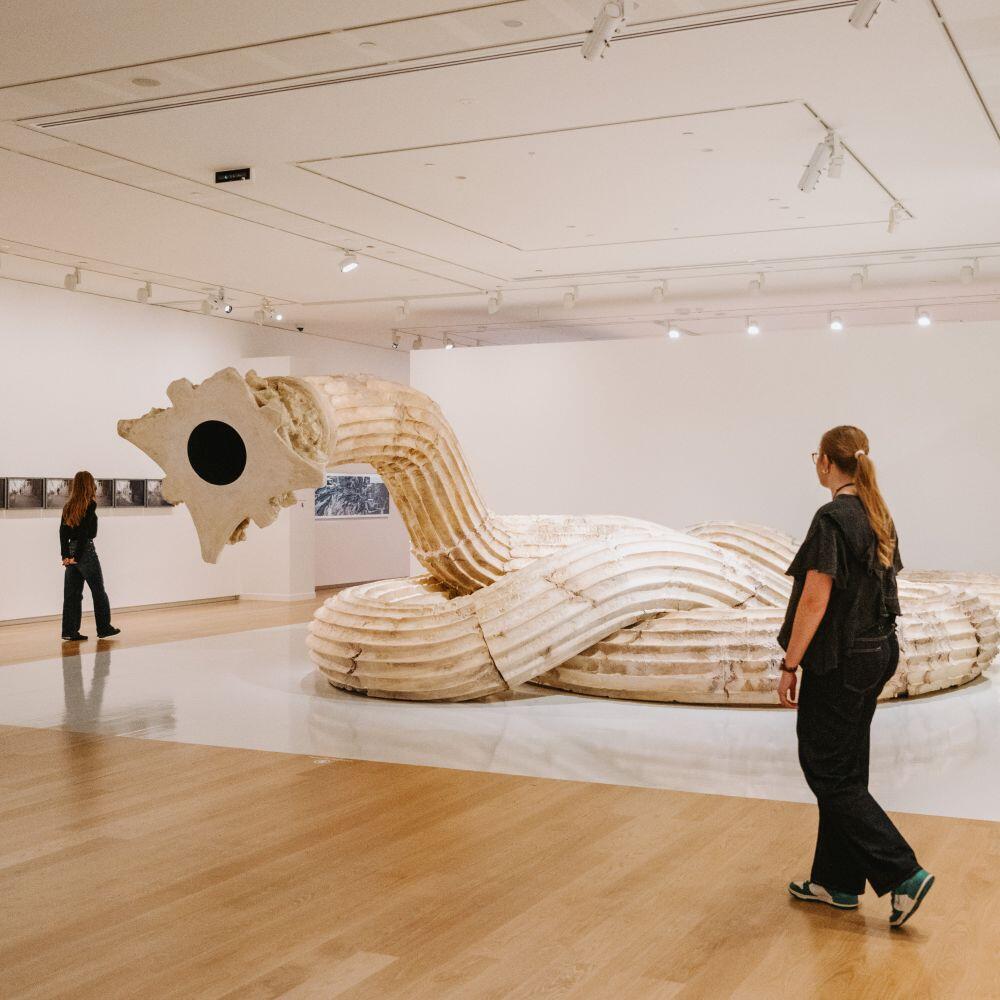
Does life feel stranger and faster than ever? This is the exhibition you need right now
15 May 2026
Read article
How to look at art: 7 beginner tips for your next art gallery visit
15 Jun 2026
Read article