Artwork Information
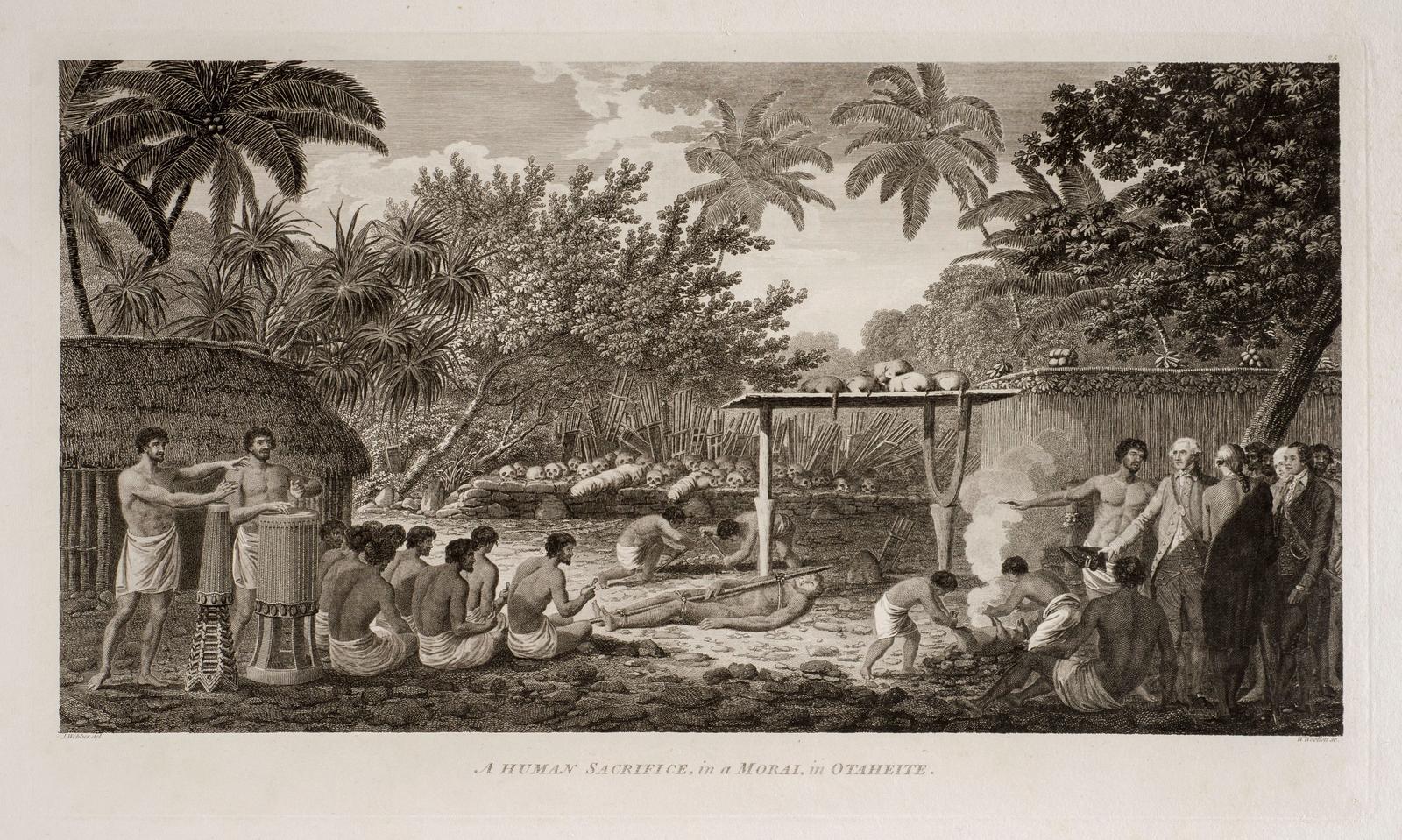
One week into Cook’s stay in Matavai Bay in Tahiti a dispute between several rival chiefs came to a head, resulting in the killing of a slave who was then ritually sacrificed both to precipitate the conflict and to honour the war-god Oro. While Cook was loath to get involved in such internal disputes, he was intrigued to see “something of this extraordinary and Barbarous custom.” The ceremony occurred over two days, so consequently it was impossible for Webber to capture the entire event in one image. Rather, he chose to represent several dramatic aspects that occurred almost simultaneously towards the conclusion of the ceremony: the priests praying to Oro in front of the corpse; the grave being dug behind them; a dog being sacrificed over a fire on the right; two men at far left beating drums; and Cook, accompanied presumably by Tu and several of his crew, at far right as witnesses.
Joppien and Smith argue the significance of this image in influencing views of the Pacific throughout the late eighteenth and nineteenth century is not to be underestimated: “Together with Webber’s representation of the murder of Cook it was regarded as final proof of the natives’ assumed brutality, their callous and treacherous behaviour, in short their godless state of existence.”
(See J&S Vol. III, Text pp.48-51, Cat. 3.99-3.100A)
- Artist
- John Webber
- Title
- A Human Sacrifice, in a Morai, in Otaheite
- Production Date
- 1784
- Medium
- engraving on paper
- Dimensions
- 287 x 488 mm
- Credit Line
- Auckland Art Gallery Toi o Tāmaki, purchased 2007
- Accession No
- 2007/29/7
- Copyright
- No known copyright restrictions
- Department
- New Zealand Art
- Display Status
- Not on display
More by John Webber (39)
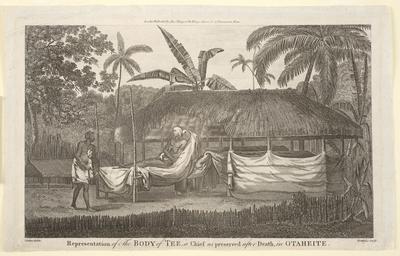
Representation of the body of Tee, A Chief as preserved after death in Otaheite
18th century
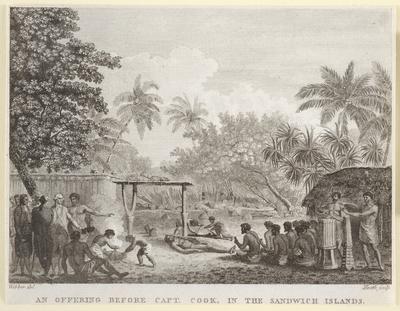
An Offering before Captain Cook in the Sandwich Islands
18th century
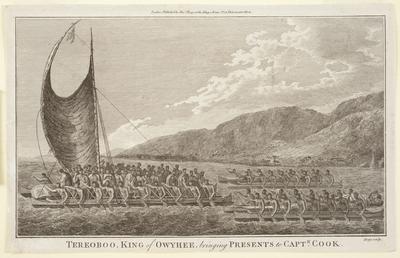
Tereoboo, King of Owyhee, bringing presents to Captain Cook
18th century
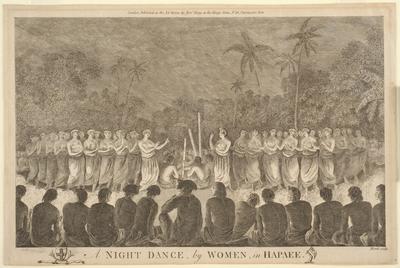
A Night dance by women, in Hapaee
18th century