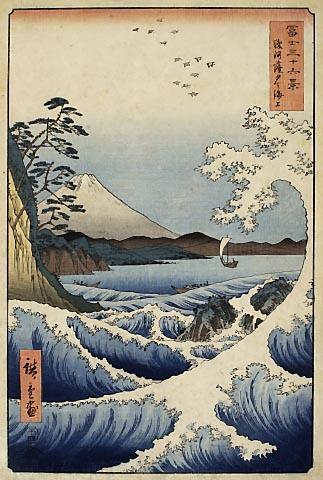
Artwork Information
In the second half of the eighteenth century, masters such as Hiroshige and Hokusai used the same techniques of flat blocks of colour, highlighted by delicate detailing, which had developed in ukiyo-e prints during the Edo period in Japan (1603-1863). Eschewing the actors and courtesans so popular with many ukiyo-e artists, they both illustrated landmarks in the Japanese countryside. Hiroshige made his first journey along the Tokaido road to Kyoto, which took him along the eastern sea route, when he was allowed to accompany the convoy escorting the group of horses which the shogun was to present to the emperor in Kyoto. The bustling activity and the picturesque scenery had a great effect on him, and in 1833-34 he published the sequential series of single-sheet prints called The Fifty-three stations on the Tokaido. Whereas Hokusai was absorbed in depicting the architectural structure in landscape, Hiroshige recorded its seasonal moods, using an innovative technique of gradation or shading, called bokashi, which was particularly suited to the landscape genre. Suruga Satta kaijô (The Sea off Satta in Suruga Province), from the series Fuji sanjûrokkei (Thirty-six Views of Mount Fuji), illustrates why he was considered the supreme master of this genre. Hiroshige influenced many Impressionist artists, notably Monet, Whistler and Pissarro, and there are a large number of editions of his prints, some produced after his death. (from The Guide, 2001)
- Artist
- Andō Hiroshige
- Title
- Suruga Satta kaijô (The Sea off Satta in Suruga Province)
- Production Date
- 1858
- Medium
- woodcut - nishiki-e (full colour) technique
- Dimensions
- 365 x 243 mm
- Credit Line
- Mackelvie Trust Collection, Auckland Art Gallery Toi o Tāmaki
- Accession No
- M87
- Copyright
- No known copyright restrictions
- Department
- International Art
- Display Status
- Not on display
More by Andō Hiroshige (31)
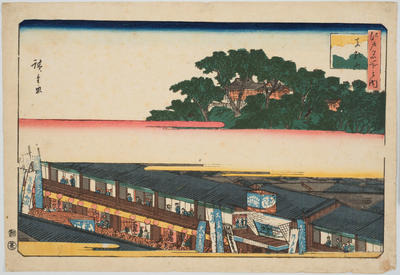
A Street of shops
circa 1850
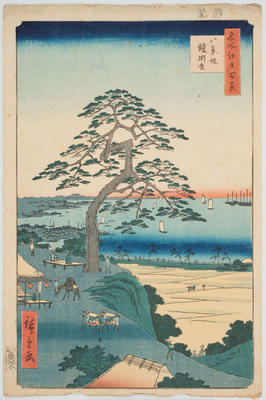
Hakkeisaka Yoroi kakematsu (The Armor-hanging Pine at Hakkeizaka)
1856
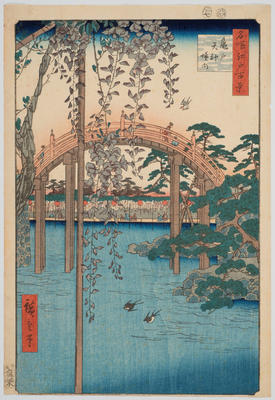
Kameido Tenjin keidai (Inside Kameido Tenjin Shrine)
1856
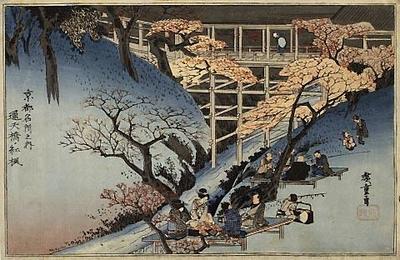
Tsûtenkyô no momiji (Red Maple Trees at the Tsûtenkyô Bridge)
circa 1834
Explore Connections (6)
Seas
578 Artworks
Mountains
333 Artworks
Cliffs
160 Artworks
Trees
1738 Artworks
Yachts
27 Artworks