Artist
Yuki Kihara
- Name
- Yuki Kihara
- Date of birth
- 1975
- Place of birth
- Sāmoa
Jump to
Artworks
Biography
Yuki Kihara is an interdisciplinary artist of Japanese and Sāmoan descent, whose practice seeks to challenge dominant historical narratives and their persistence in the socio-political climate of a globally connected South. Taking a research-based
approach to her practice, Kihara often references the cultural traditions of her native lands through experimentations in a range of media, including performance, sculpture, video and photography.
Migrating to Aotearoa New Zealand from Sāmoa in 1989, Kihara studied fashion at Wellington Polytechnic. While still a student, her street-inspired protest garment Bombacific, 1995, was acquired by the Museum of New Zealand Te Papa Tongarewa.
Over the last two decades, Kihara has become a central figure within the intensifying global focus on Indigenous issues and artistic practice through major exhibitions nationally and internationally. In 2008, the Metropolitan Museum of Art in New York staged the solo exhibition Shigeyuki Kihara: Living Photographs, which featured a survey of her works exploring the absence of fa‘afafine (Sāmoan third gender) within historical photographic archives. The museum subsequently acquired a selection of her works for their permanent collection.
Kihara’s work has also been presented at the Gwangju Biennale (2023), Aichi Triennale (2022), Bangkok Art Biennale (2018), Honolulu Biennale (2017), Asia Pacific Triennial (2015 and 2002) and Sakahàn Quinquennial (2013). In 2022, Kihara represented Aotearoa New Zealand at the 59th Venice Biennale with the critically acclaimed solo exhibition Paradise Camp, curated by Natalie King.
approach to her practice, Kihara often references the cultural traditions of her native lands through experimentations in a range of media, including performance, sculpture, video and photography.
Migrating to Aotearoa New Zealand from Sāmoa in 1989, Kihara studied fashion at Wellington Polytechnic. While still a student, her street-inspired protest garment Bombacific, 1995, was acquired by the Museum of New Zealand Te Papa Tongarewa.
Over the last two decades, Kihara has become a central figure within the intensifying global focus on Indigenous issues and artistic practice through major exhibitions nationally and internationally. In 2008, the Metropolitan Museum of Art in New York staged the solo exhibition Shigeyuki Kihara: Living Photographs, which featured a survey of her works exploring the absence of fa‘afafine (Sāmoan third gender) within historical photographic archives. The museum subsequently acquired a selection of her works for their permanent collection.
Kihara’s work has also been presented at the Gwangju Biennale (2023), Aichi Triennale (2022), Bangkok Art Biennale (2018), Honolulu Biennale (2017), Asia Pacific Triennial (2015 and 2002) and Sakahàn Quinquennial (2013). In 2022, Kihara represented Aotearoa New Zealand at the 59th Venice Biennale with the critically acclaimed solo exhibition Paradise Camp, curated by Natalie King.
Artworks by Yuki Kihara (20)
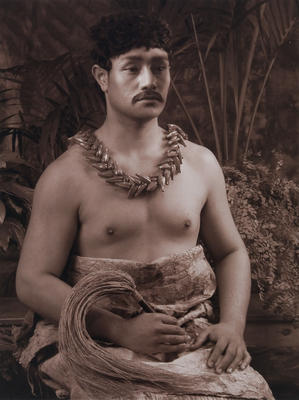
Tama Samoa - Samoan Man
Yuki Kihara
2005
Artwork
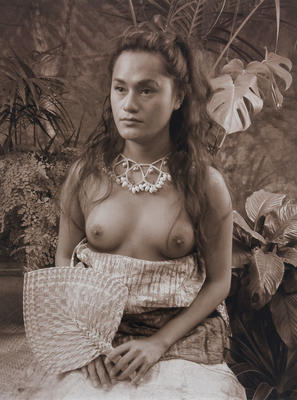
Teine Samoa - Samoan Woman
Yuki Kihara
2005
Artwork
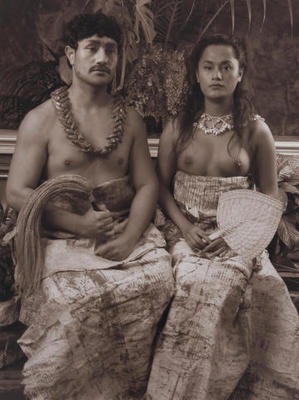
Ulugali'i Samoa - Samoan Couple
Yuki Kihara
2005
Artwork
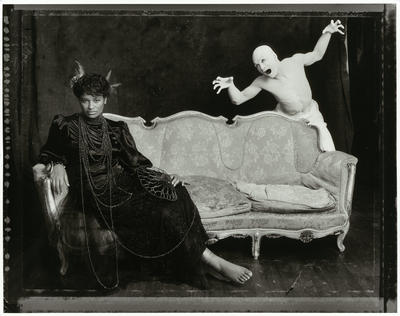
Daughter of the High Chief
Yuki Kihara
2003
Artwork
Next artist